Ownership and Maintenance
How Much Does a Porsche Service Cost? A South Bay Owner's Guide
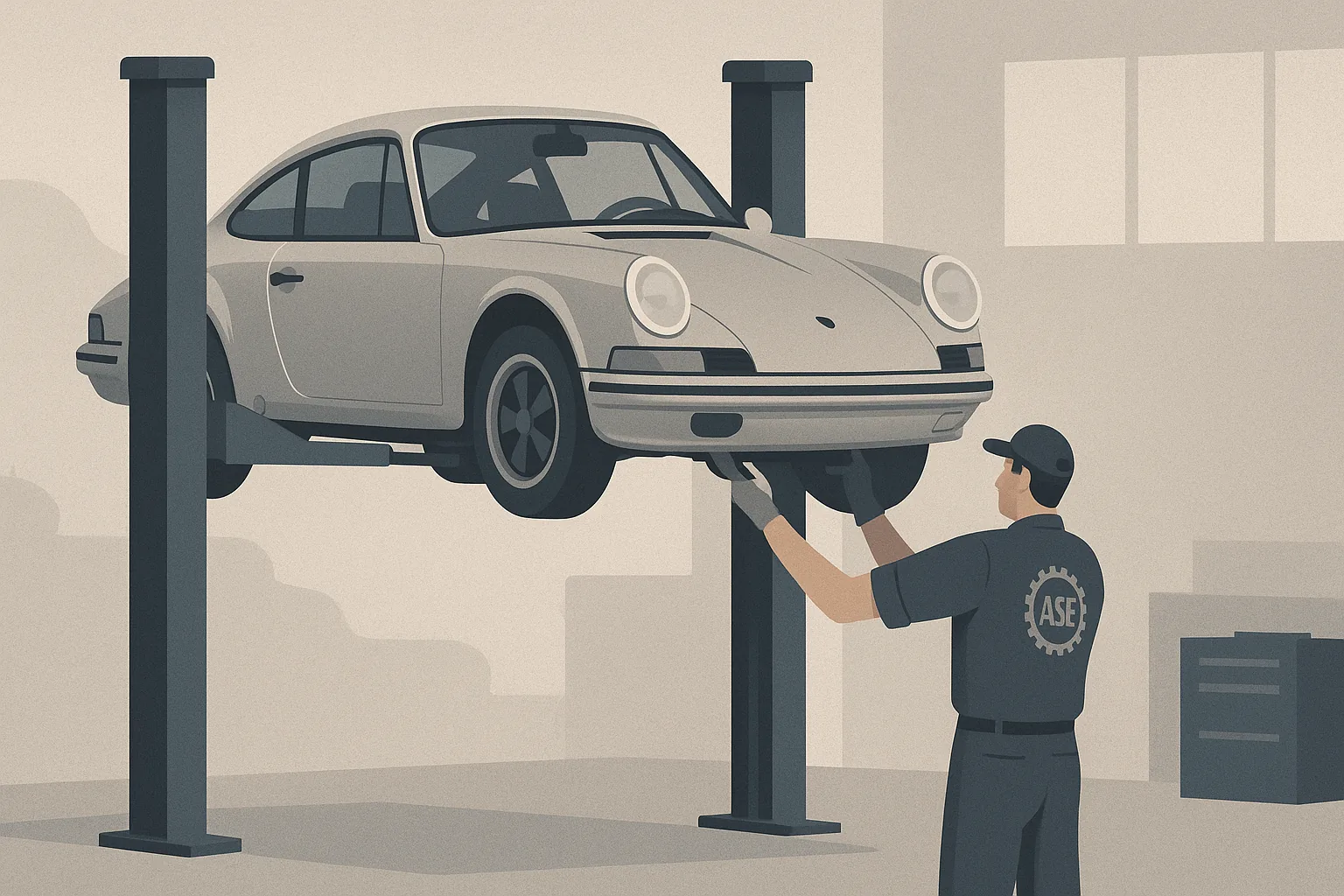
I'm Shawn Baker, founder of Luxury Motors of South Bay in Hermosa Beach and an ASE Certified Master Technician. The question I hear most from Porsche owners across the South Bay is some version of this: what is a service actually going to cost me, and is the dealer really worth it? So here is the honest answer, from someone who does this work every day. Your Porsche service cost comes down to a short list of predictable items, and the biggest lever you control is where the work gets done. An independent shop that handles Porsche maintenance keeps that number well below dealer rates for the same OEM-quality service.
I'm not going to hand you a made-up dollar figure. A fair estimate comes from looking at your actual car, its year, and its mileage. What I can do is show you exactly where the money goes, so you can budget with confidence.
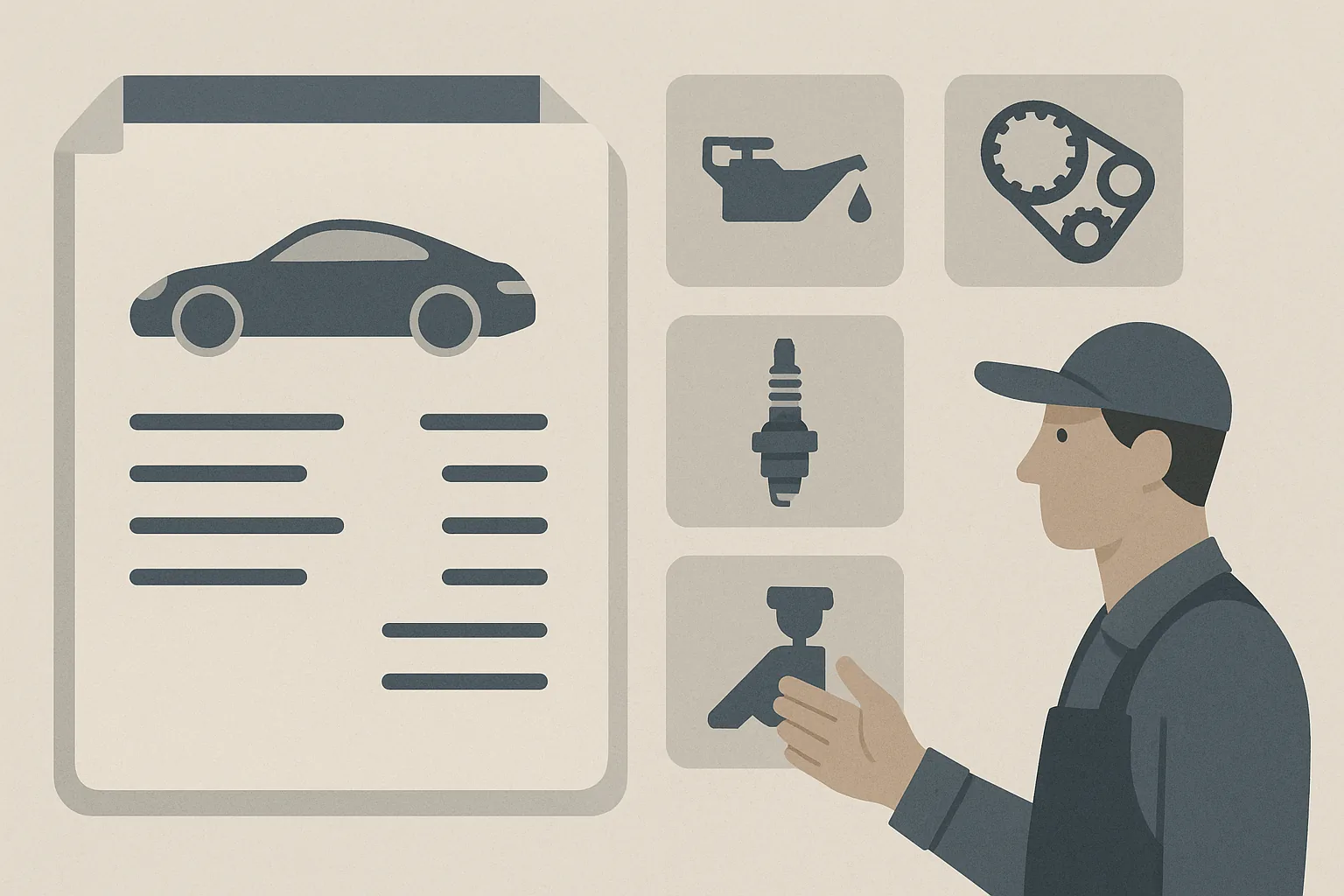
Illustrative categories, not a quote. Your actual cost depends on model, year, mileage, and what the car is due for.
How much does a Porsche service cost?
A Porsche service cost falls into two buckets: the smaller minor service you'll see most years, and the larger major service that comes up on a longer interval. There is no single price, because it tracks your model, year, mileage, and what the car is due for.
Think of it the way I explain it in the bay. The minor service is your recurring maintenance visit. The major service is the bigger scheduled milestone. Both matter, and knowing which one you're facing is the difference between a fair budget and a nasty surprise.
For a representative sense of scale (a range, not a quote): a minor service tends to land in the lower hundreds, while a major service with spark plugs and multiple filters runs into the higher hundreds or beyond, depending on the model. A 911 with a flat-six is different work than a Macan, so the numbers move with the car.
How often does a Porsche need to be serviced?
Most modern Porsches call for service about once a year or every 10,000 miles, whichever comes first. Your exact schedule lives in the maintenance booklet for your specific model and year, and I always check it against the car in front of me.
Porsche's own recommended intervals set the baseline here, and they vary across the lineup: a 911, a Cayenne, a Macan, and a Panamera don't all read the same page. The safe move is to confirm the interval for your VIN rather than assume.
Use the booklet as your source of truth, then have a specialist verify what's actually due. On a car you just bought used, get a baseline inspection first so you know where you're really starting, not where the previous owner said you were.
What's in a minor Porsche service?
The minor service is the visit you'll see most often, and it's the cheapest insurance you can buy. It's the recurring maintenance that keeps the expensive problems from ever showing up.
A minor service generally covers:
- Engine oil and oil filter, using the correct full-synthetic spec for your engine
- A multi-point inspection of brakes, tires, suspension, and undercarriage
- Checking and topping key fluids (coolant, brake, power steering where applicable)
- A scan for stored fault codes with factory-level diagnostic tools
- A look for the early signs of the leaks and wear common to your model
That oil spec matters more than people think. Porsche engines want a specific approved oil, and this is not the place to save a few dollars with a generic product. We use the right spec every time and tell you which one your engine takes and why.
What's in a major Porsche service, and why does it cost more?
A major service is the larger scheduled milestone, and it costs more because it adds parts and labor on top of everything the minor service already covers. It comes up less often, but it's the one worth planning for.
On top of the oil and inspection, a major service typically adds:
- Spark plugs. A milestone item on the gas engines, set by mileage. On a flat-six there's real labor to reach them, which is a big part of the cost.
- Air and cabin filters. Replaced on their own longer interval so the engine breathes and the cabin stays clean.
- Brake fluid flush. Brake fluid absorbs moisture over time; a flush on schedule protects braking performance and your calipers.
- A deeper inspection. More thorough than the minor, catching wear items before they become failures.
Because the parts and hours stack up, the major service is where the bigger number lands. Budget for it ahead of time and it stops being scary. Our Porsche maintenance service walks the whole schedule with you, and if you want the model-specific version, the Porsche 911 maintenance guide goes deeper on that platform.
What about older air-cooled and early water-cooled Porsches?
Older Porsches need a specialist's eye, because their service needs are different from a modern car's. Air-cooled 911s have their own rhythm, and the early water-cooled cars carry one well-known consideration.
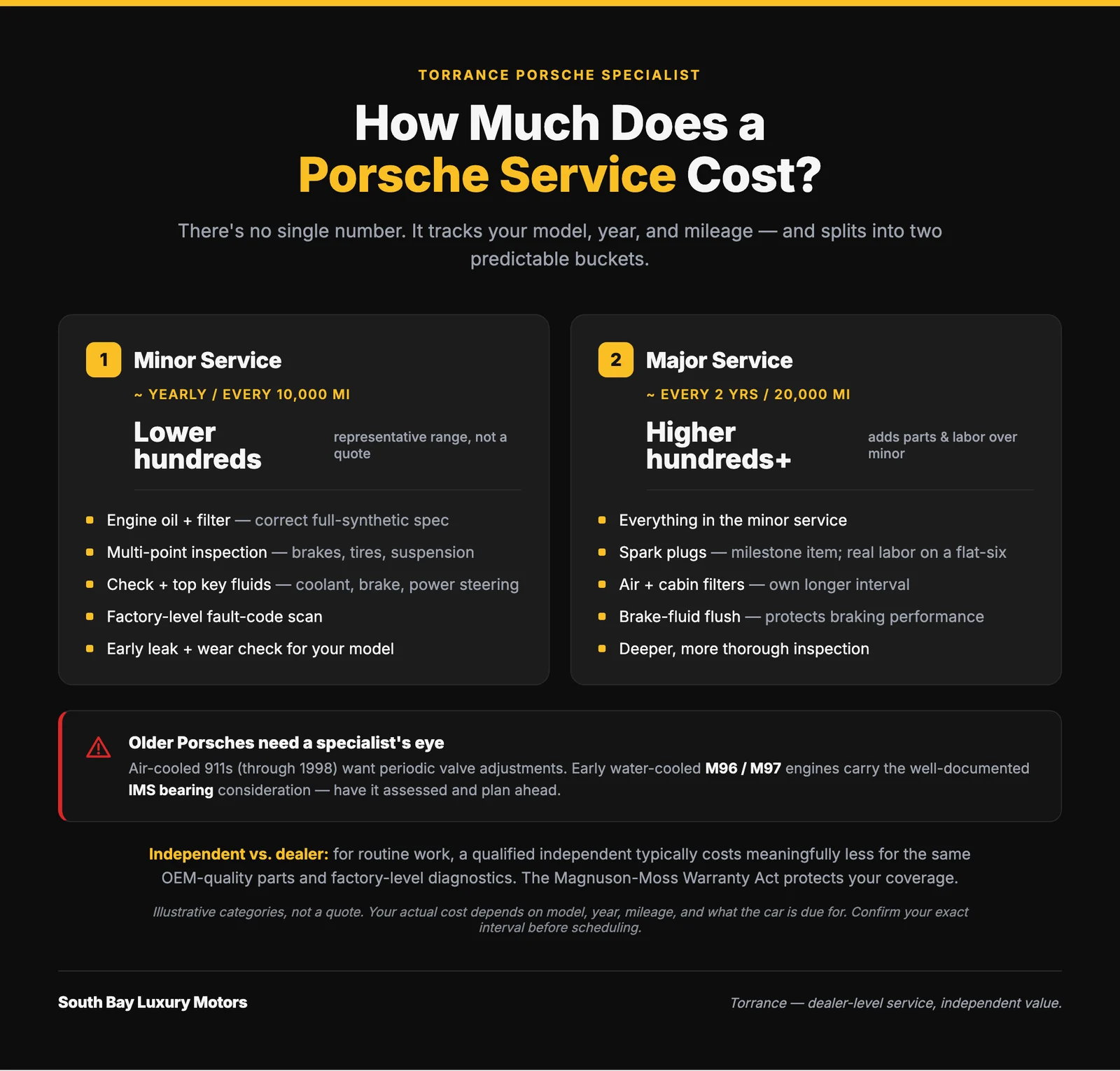
Representative comparison for planning. Confirm your exact model, year, and interval before scheduling work.
Air-cooled 911s (through 1998) often need periodic valve adjustments and have model-specific service items you won't find on a newer car. They reward an owner who services them on rhythm rather than by warning light.
The early water-cooled M96 and M97 engines (late-1990s through the mid-2000s Boxster, Cayman, and 911) carry the widely documented IMS bearing consideration. If you own one of these, it's worth having the bearing assessed so you can plan proactively instead of reacting to a failure. This is exactly the kind of judgment call where a Porsche specialist earns their keep, and our write-up on common Porsche problems covers what we see most.
Is it cheaper to service a Porsche at an independent shop?
For routine maintenance and most repairs, yes. An independent Porsche specialist typically charges meaningfully less than the dealer for the same OEM-quality parts and factory-level diagnostics.
You're not trading quality for price. You're removing the dealership's overhead from work that doesn't require the dealership to perform it. Federal law (the Magnuson-Moss Warranty Act) protects your warranty as long as the service is done to specification with the correct parts, so servicing at a qualified independent doesn't void your coverage.
Where does the savings come from? Not corner-cutting. It's the labor rate and the markup, not the standard of the work. If you want the fuller comparison, we lay it out in Porsche dealer vs independent, and the broader question gets its own page in is dealership service worth it.
How do I keep my Porsche service cost down without cutting corners?
Three habits do most of the work:
- Do the minor service on time, to spec. The cheapest maintenance is the maintenance that prevents a bigger repair. A missed oil service is how a cheap visit becomes an expensive one.
- Plan for the major service before it lands. Spark plugs and the milestone items don't sneak up if you know the interval. Set the money aside and it's routine, not a shock.
- Skip the dealership overhead for routine work. For anything that doesn't require the dealer, an independent specialist gives you the same standard for less.
The theme that runs through all of it is correct diagnosis first. A rough-running engine or a warning light gets a proper Porsche engine diagnostic with factory-level tools, so you pay to fix the real problem instead of throwing parts at a guess.
The bottom line on Porsche service cost
A Porsche service cost isn't a mystery once you separate the two buckets. The minor service is your predictable yearly item; the major service is the larger scheduled milestone with spark plugs, filters, and a brake-fluid flush. Older air-cooled and early water-cooled cars deserve a specialist's inspection, and the IMS-era engines especially warrant a plan.
At Luxury Motors of South Bay we're an independent Porsche, Audi, Mercedes-Benz, and BMW specialist in Hermosa Beach. We diagnose with the same tier of tools the dealer uses, we quote fairly after we inspect, and we never upsell. If you want a real service plan built around your specific Porsche, not a generic estimate, call us at 310-504-0089 or book an appointment for Porsche maintenance.
Frequently Asked Questions
How much does a Porsche service cost?
There is no single number, because it depends on your model, the year, mileage, and whether you are due for a minor or major service. A minor service (oil and filter, inspection, key fluids) is the smaller recurring item; a major service adds spark plugs, more filters, and a fuller inspection and costs more. The most honest way to get a real figure is a baseline inspection followed by an itemized quote, which is exactly how we work.
How often does a Porsche need to be serviced?
Most modern Porsche models call for service roughly once a year or every 10,000 miles, whichever comes first, with a larger major service at longer intervals (commonly around every two years or 20,000 miles, and bigger milestone services like spark plugs at set mileages). Always confirm the schedule for your exact model and year in the owner's maintenance booklet, since intervals vary across the 911, Cayenne, Macan, Panamera, and older water-cooled cars.
Is it cheaper to service a Porsche at an independent shop than the dealer?
For routine maintenance and most repairs, an independent Porsche specialist typically charges meaningfully less than the dealer for the same OEM-quality parts and factory-level diagnostics, because you are not paying dealership overhead. The work is the same standard; the markup is not. Federal law also protects your warranty as long as service is done to specification with the correct parts.
What is the difference between a minor and a major Porsche service?
A minor service is the recurring maintenance visit: oil and filter, a multi-point inspection, and topping or changing key fluids. A major service is the larger scheduled visit that adds items like spark plugs, additional filters (air and cabin), a brake-fluid flush, and a deeper inspection. The major service comes up less often but costs more because of the added parts and labor.
Do older air-cooled and early water-cooled Porsches need special attention?
Yes. Air-cooled 911s have their own valve-adjustment and service needs, and the early water-cooled M96 and M97 engines (late-1990s to mid-2000s Boxster, Cayman, and 911) carry the well-documented IMS bearing consideration. If you own one of these, it is worth a specialist's inspection to assess the bearing and plan ahead rather than react to a failure.
Want a straight answer on what your Porsche actually needs? Start with an inspection.
Learn more