

01
Engine oil and filter replacement
Engine oil and filter replacement using Porsche-approved full synthetic oil
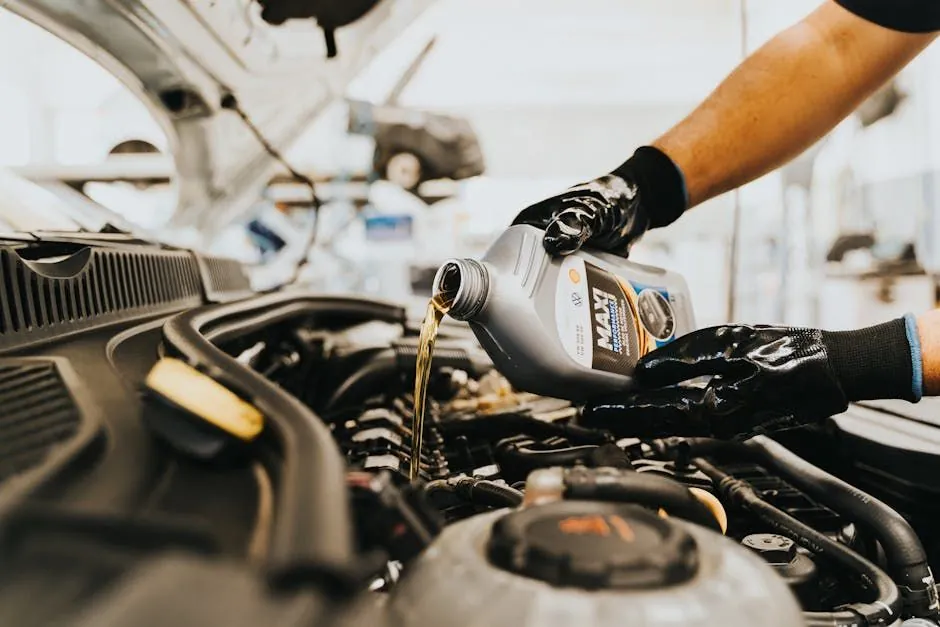
Your Porsche 911 is due for service, and you’re not sure exactly what it needs, what Porsche maintenance includes at each interval, or whether older models carry risks like IMS bearing failure. Proper Porsche 911 maintenance in Hermosa Beach keeps the flat-six running at peak performance, protects engine reliability, and prevents the small problems that become expensive ones. Staying current on oil changes, brake fluid replacement, spark plugs, and cabin air filters is what separates a 911 with 200,000 miles from one that’s falling apart at 80,000.
Porsche recommends servicing the 911 every 10,000 miles or 12 months, whichever comes first. The schedule alternates between minor and major service intervals.
Here’s the quick-reference breakdown:
| Mileage | Service Type | Key Items |
|---------|-------------|-----------|
| 10,000 | Minor | Oil + filter change, multi-point inspection |
| 20,000 | Minor | Oil + filter, brake fluid check, air filter inspection |
| 30,000 | Minor | Oil + filter, cabin air filter, brake inspection |
| 40,000 | Major | Oil + filter, spark plugs, brake fluid flush, cabin air filter, full inspection |
| 60,000 | Major | All 40K items plus coolant replacement, deeper mechanical inspection |
This schedule applies broadly across modern 911 generations, though specific items vary by model year. We’ll cover generation differences below.
The pattern repeats every 60,000 miles. Minor services keep the engine clean and lubricated. Major services replace wear items and catch problems before they become failures. Skipping any of these intervals accelerates wear on a car that was engineered to last decades with proper care.
Every 10,000 miles or once a year. This is the most frequent service item and the single most important thing you can do for your 911’s longevity.
Porsche specifies a full-synthetic oil meeting their A40 specification. Mobil 1 0W-40 is the most common choice, though several other brands meet the same spec. The 911’s flat-six engine holds between 8 and 10 quarts depending on the generation, which is significantly more than most cars. That extra capacity is one reason Porsche allows a 10,000-mile interval, but it also means oil changes cost more than your average sedan.
One thing that surprises some new 911 owners: these engines burn oil. It’s normal. Porsche considers up to one quart per 3,000 miles acceptable on naturally aspirated models, and turbo engines can consume more under hard driving. Check your oil level monthly, and top off between services if needed.
The oil filter gets replaced at every oil change. On 911s, the filter housing is accessible from the top of the engine, which makes it straightforward. What matters more than ease of access is using the correct filter. Porsche-spec filters have a specific bypass valve pressure rating. Aftermarket filters that don’t meet this spec can cause oil pressure issues.
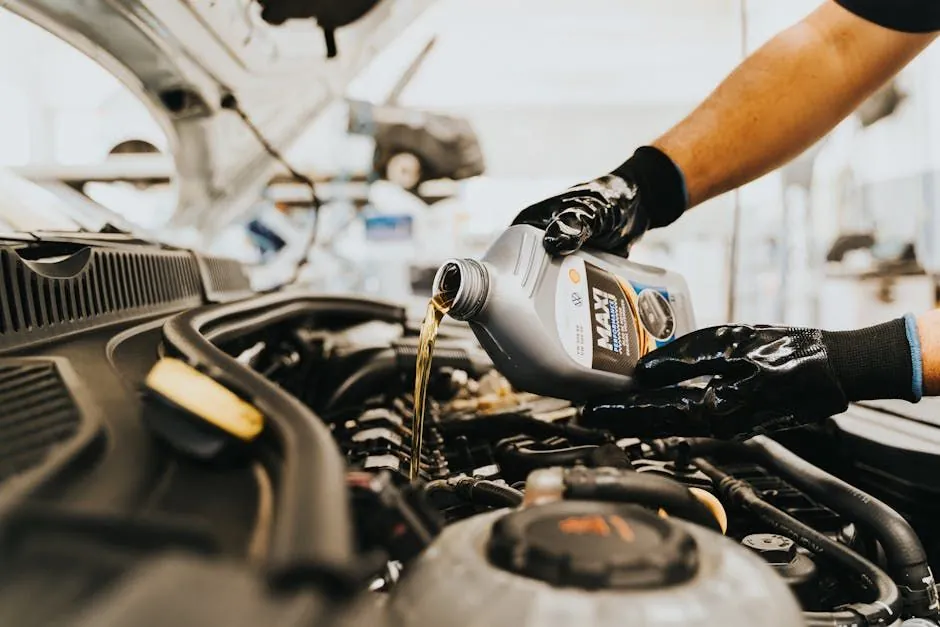
The annual service (minor service) covers the essentials that keep the engine protected between major intervals.
At Luxury Motors of South Bay, a standard Porsche 911 annual service includes:
Engine oil and filter replacement using Porsche-approved full synthetic oil
Multi-point visual inspection of belts, hoses, suspension components, and exhaust
Brake inspection measuring pad thickness and rotor condition
Fluid level check on brake fluid, coolant, power steering (where applicable), and washer fluid
Tire inspection for wear pattern and tread depth (we inspect tires but don’t sell or mount them)
Battery test and charging system check
Diagnostic scan of all control modules for stored fault codes
That last item is important. A diagnostic scan can catch developing problems that don’t have symptoms yet. A stored fault code for a misfiring cylinder or an oxygen sensor drifting out of range means you can address the issue before it causes real damage.
The entire annual service takes about 90 minutes to two hours, depending on what the inspection reveals.
A minor service keeps the 911 lubricated and inspected. A major service goes deeper and replaces parts that wear out over longer intervals.
Minor service (every 10,000 miles):
Oil and filter change
Multi-point inspection
Fluid level checks
Brake measurement
Diagnostic scan
Everything in the minor service, plus:
Spark plug replacement (typically six plugs on a flat-six)
Brake fluid flush and replacement
Cabin air filter replacement
Engine air filter replacement
Coolant replacement (at 60K)
More detailed inspection of suspension bushings, CV joints, and engine mounts
Major service (every 40,000-60,000 miles):
Spark plugs on a 911 are a bigger job than on most cars because of the boxer engine layout. Access requires more disassembly, which is why labor costs are higher. But fresh plugs restore combustion efficiency, which matters on a high-performance engine.
Brake fluid replacement every 40,000 miles (or every two years, whichever comes first) is non-negotiable. Brake fluid absorbs moisture over time. Moisture lowers the boiling point. On a car that can hit 180 mph, you need brake fluid that performs under extreme heat. Old fluid with absorbed moisture can boil during hard braking, causing a spongy pedal or temporary brake fade.
The basic interval of 10,000 miles or 12 months applies to all modern 911 generations. The differences are in the details.
996 (1999-2004): This is the generation that earned the IMS bearing its reputation. The intermediate shaft bearing in the M96 and M97 engines can fail without warning, potentially destroying the engine. Not every 996 will have this problem, but it’s worth monitoring. An IMS bearing guard or retrofit is a common preventive measure. Oil choice matters more on this generation, as the engine is more sensitive to additives.
997 (2005-2012): Porsche improved the IMS bearing design, though early 997.1 models (2005-2008) still use a version that can fail. The 997.2 (2009-2012) switched to a more robust bearing design. Service intervals remain the same. The 997 introduced the Porsche PASM suspension on many trims, which adds a module to check during diagnostic scans.
991 (2012-2019): The 991 was the first 911 with turbocharging across the entire Carrera lineup (991.2, starting in 2016). Turbo models put more thermal stress on engine oil, which makes consistent oil changes even more critical. The 991 also uses direct fuel injection, which can lead to carbon buildup on intake valves over time. Some specialists recommend walnut blasting every 50,000-60,000 miles.
992 (2020-present): The current generation runs more complex electronics with additional control modules. Service intervals haven’t changed, but diagnostic capability matters more. The 992’s turbocharged flat-six produces more power and heat than previous generations, which means oil quality and cooling system health matter most.
Regardless of generation, every 911 benefits from the same discipline: consistent intervals, correct fluids, and a technician who knows the platform.
This is the question that brings most 911 owners to an independent Porsche specialist in the first place.
Dealer pricing (typical ranges):
Minor service (oil change + inspection): $500 to $800
Major service (40K): $1,500 to $2,500
Major service (60K): $2,000 to $3,000+
Minor service: $300 to $500
Major service (40K): $900 to $1,500
Major service (60K): $1,200 to $2,000
Independent specialist pricing (typical ranges):
That’s a 30% to 50% savings on every service visit. Over the life of the car, the difference adds up to thousands.
The question most owners ask is: “Am I giving up quality by going independent?” The answer depends entirely on the shop. At Luxury Motors of South Bay, we use the same dealer-level diagnostic scan tools the Porsche dealership uses. We source OEM or Porsche-approved parts. Shawn Baker, our ASE Certified Master Technician, has worked on Porsche vehicles for over 20 years across more than 20,000 cars.
Your warranty isn’t affected either. Federal law (the Magnuson-Moss Warranty Act) protects your right to service your vehicle at an independent shop without voiding the manufacturer’s warranty, as long as the work is performed to spec with appropriate parts.
Porsche engines are over-engineered. They’ll tolerate some neglect before they complain. But tolerance has limits, and those limits cost real money when you hit them.
Skipping oil changes is the fastest way to shorten a 911’s life. The flat-six runs hot and works hard. Old oil breaks down, loses its viscosity, and stops protecting internal components. Bearings wear. Rings score cylinder walls. By the time you notice symptoms, the damage is done.
Ignoring brake fluid turns a safety system into a liability. Moisture-contaminated brake fluid boils under hard braking, causing inconsistent pedal feel or complete loss of braking power. On a car with this much performance, that’s not a minor concern.
Delaying spark plug replacement causes misfires, rough idle, and increased fuel consumption. More importantly, unburnt fuel from misfiring cylinders can damage catalytic converters, which cost $2,000 to $4,000 each to replace on a 911.
Skipping the diagnostic scan means you’re flying blind. Stored fault codes catch developing problems before you feel them. A failing oxygen sensor, a coolant temperature anomaly, or a boost pressure deviation are all things the computer sees before you do.
Porsche longevity isn’t a myth. There are 911s with 300,000+ miles on original engines. Every single one of them was maintained on schedule.
If your 911 is coming up on a service interval, or if it’s been a while and you’re not sure what it needs, schedule your Porsche service with us. You can also learn more about our full routine maintenance services or our Porsche specialist capabilities.
Luxury Motors of South Bay | 505 Pacific Coast Hwy, Hermosa Beach, CA 90254 | 310-504-0089
240 five-star Google reviews. 20,000+ vehicles serviced. Zero negative reviews.
Porsche quoted me $5,000 for a brake job. I called Shawn, and over the phone, he gave me a price that was a fraction of that.
I recently brought my 2004 Porsche 911 Turbo… What I appreciated most was their honesty; they provided a 25-point inspection… It is rare to find a shop that treats both the customer and the car with this much respect.
I have a Porsche 911 and I am very selective on who I have work on my car. Expert level knowledge on luxury cars.
The dealership claimed it was just a battery issue. When the problem persisted, I turned to Luxury Motors of South Bay and they quickly identified and resolved the actual issue with precision.
These dudes know what they’re doing. I took my Audi in and they treated it like it was their own. Straightforward, honest…
Luxury Motors of South Bay serves the South Bay from our shop at 505 Pacific Coast Hwy, Hermosa Beach, CA 90254.
Bring your vehicle in for a no-pressure inspection. Shawn Baker, ASE Certified Master Technician with over 20 years of experience, leads every diagnosis. You’ll get photos, honest findings, and a clear estimate. No surprises, no upselling.
240 five-star Google reviews from real South Bay drivers. That’s not a tagline. It’s a track record.