CALL: 310-504-0089
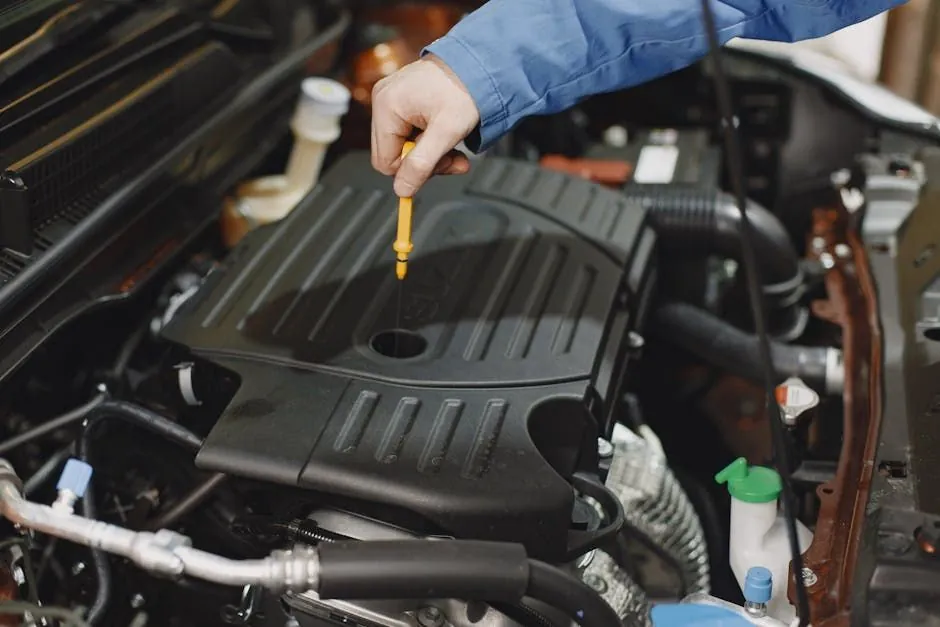
Engine diagnostics on a German luxury vehicle in Torrance
Engine Diagnostics

Expert Engine Diagnostics for German Luxury Vehicles

A check engine light, engine misfire, or rough idling can mean a dozen different things on a German luxury car. Engine diagnostics at South Bay Luxury Motors in Torrance pinpoints the actual fault using dealer-level diagnostic tools, so you get an accurate diagnosis that can help prevent further damage and save you from unnecessary repairs. Whether you drive a Porsche, BMW, Audi, or Mercedes-Benz, our factory diagnostic software reads deeper than generic code scanners, and that’s how we solve problems other shops can’t find.

Pricing

How Much Does Engine Diagnostics Cost in Torrance?

Engine diagnostics typically runs between $100 and $250 depending on your vehicle and how deep the issue goes. The price depends on whether you need a basic fault code reading or a full system-level diagnostic with live data analysis and component testing.

01

The $30 Code Scan Trap

Here’s the thing most shops won’t tell you: a $30 code scan at an auto parts store gives you a trouble code. That’s it. A code like P0301 says “cylinder 1 misfire,” but it doesn’t tell you whether it’s a failing ignition coil, a worn spark plug, a clogged fuel injector, or a vacuum leak. You still don’t know what to fix.

02

A Full Engine Diagnostic

A full engine diagnostic uses OBD-II scanning plus factory-level software to pull stored codes, pending codes, freeze frame data, and live sensor readings. We test the components the codes point to. We look at fuel trim numbers, oxygen sensor voltage, and timing values. And then we tell you exactly what’s wrong, what it’ll cost to fix, and what happens if you wait.

The diagnostic fee often pays for itself. We’ve seen Torrance customers spend hundreds at other shops replacing parts that weren’t the problem. One correct diagnosis up front is almost always cheaper than two wrong guesses.

Learn more about our team and approach

Common Causes

What Causes the Check Engine Light on German Luxury Cars?

German vehicles use complex electronics that trigger check engine lights and dashboard warning lights for reasons most generic shops aren’t equipped to decode. The causes depend heavily on the make, model, and mileage.

BMW

BMW owners commonly see lights triggered by VANOS solenoid faults, N54 and N55 ignition coil failures, thermostat housing leaks that set coolant temperature codes, and oxygen sensor degradation. The mass airflow sensor is another frequent trigger on higher-mileage 3 and 5 Series models.

Porsche

Porsche check engine lights often come from oil pressure sensor failures on flat-six engines, VarioCam timing solenoid issues, catalytic converter efficiency codes, and evaporative emissions system leaks. The 911 and Cayenne have specific fault patterns that generic scanners miss entirely.

Audi and Volkswagen

Audi and Volkswagen share the EA888 engine platform, where carbon buildup on direct injection valves, turbocharger wastegate faults, and EGR valve failures are some of the most common triggers. The TFSI engines are particularly prone to ignition coil and spark plug failures at shorter intervals than most drivers expect.

Mercedes-Benz

Mercedes-Benz vehicles set codes for air suspension faults (especially on GLE and GLS models), transmission sensor failures, and engine control module communication errors. The electrical architecture on newer Mercedes models is among the most complex in the industry.

A generic code reader pulls the same P-code from all of these. But the root cause behind that code is completely different on a BMW than it is on a Porsche. That’s why factory-level diagnostics matter. Learn more about BMW check engine light causes.

Dealer-level diagnostic tools for European vehicles
Why We’re Different

Why Do Other Shops Miss the Problem (and How Do We Find It)?

Many customers walk into our shop after the same frustrating experience. They took their car to a general mechanic or even a dealership, paid for a diagnosis, got parts replaced, and the problem came back. Some have been through this cycle two or three times before finding us.

The difference comes down to tools and experience.

Most independent shops use aftermarket scan tools that read basic OBD-II codes. Those tools work fine on simpler vehicles. But German luxury cars have proprietary control modules that only respond to factory-level diagnostic software. We use the same tools authorized dealerships use:

Factory Tools

Dealer-Level Diagnostic Systems

01

PIWIS Tester for Porsche

PIWIS Tester for Porsche (accesses every module in the vehicle, including VarioCam, PDCC, and Sport Chrono systems)

02

ISTA for BMW

ISTA for BMW (full coding, programming, and guided fault isolation for every BMW system)

03

ODIS for Audi and Volkswagen

ODIS for Audi and Volkswagen (mechatronic diagnostics, DSG calibration, and turbo monitoring)

04

Xentry for Mercedes-Benz

Xentry for Mercedes-Benz (Star Diagnostic access for every Mercedes control module)

These tools don’t just read codes. They pull live data streams, run actuator tests, check module communication, and isolate intermittent electrical faults that come and go without setting a permanent code. That’s how we find problems that other shops miss.

Experience

Systematic Fault Isolation, Not Guessing

Shawn Baker, our founder and ASE Certified Master Technician, has over two decades of experience and has worked on more than 20,000 vehicles. He graduated with honors from Universal Technical Institute, trained at authorized dealerships, and spent time repairing military aircraft in active combat zones as a U.S. Marine. That background built a diagnostic approach rooted in systematic fault isolation, not guessing.

Real examples from our shop:

A dealership told a customer their BMW’s electrical issue was a failed engine computer and quoted over $2,000 for replacement. We found a corroded ground wire. The actual repair cost a fraction of that quote.

Another customer’s Mercedes kept stalling. The previous shop replaced the battery twice. We diagnosed a failing transmission speed sensor that was sending bad data to the engine control module.

A Porsche 911 owner came in after three mechanics couldn’t clear a persistent check engine light. We used the PIWIS Tester to identify an intermittent oil pressure sensor fault that only triggered under specific driving conditions.
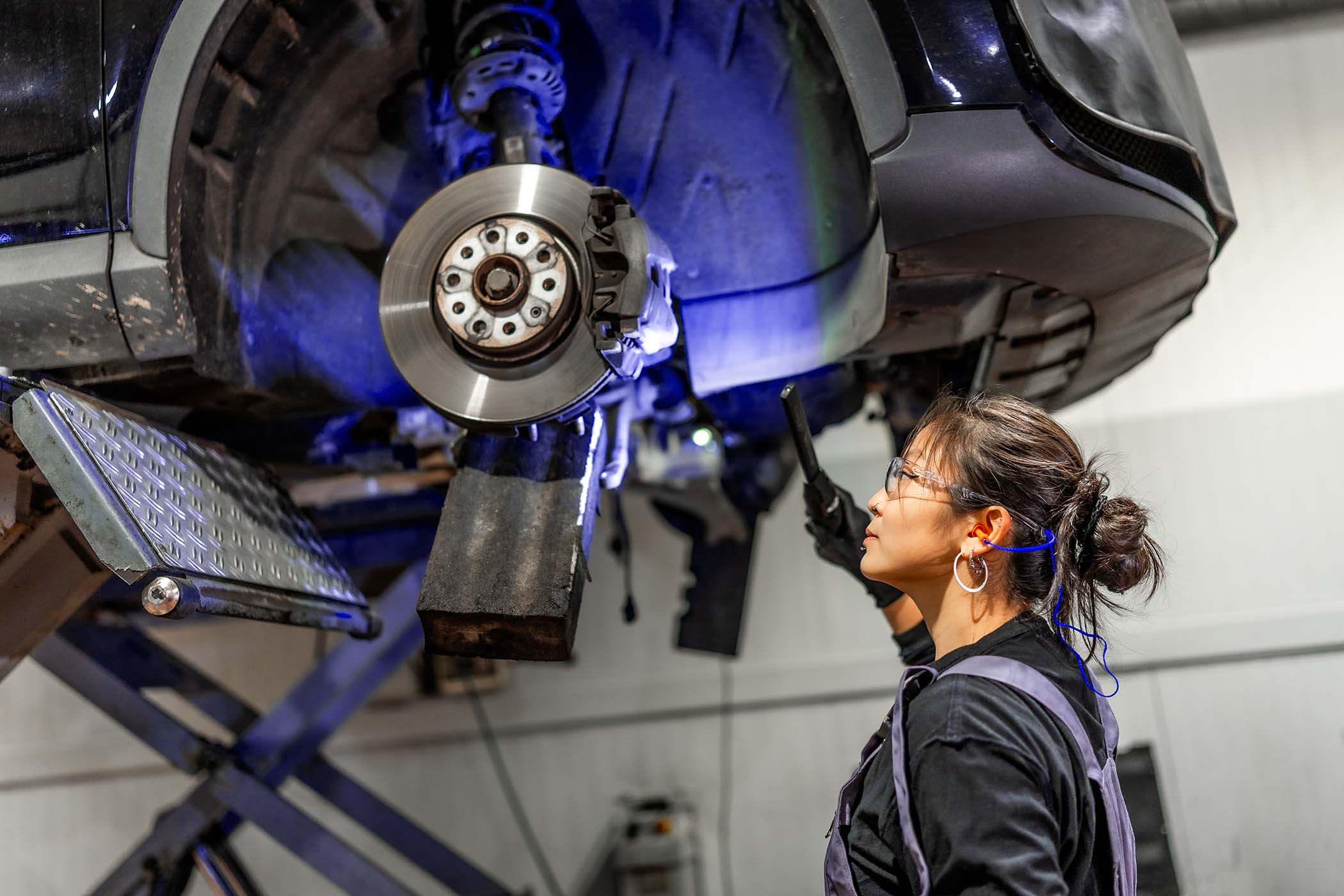
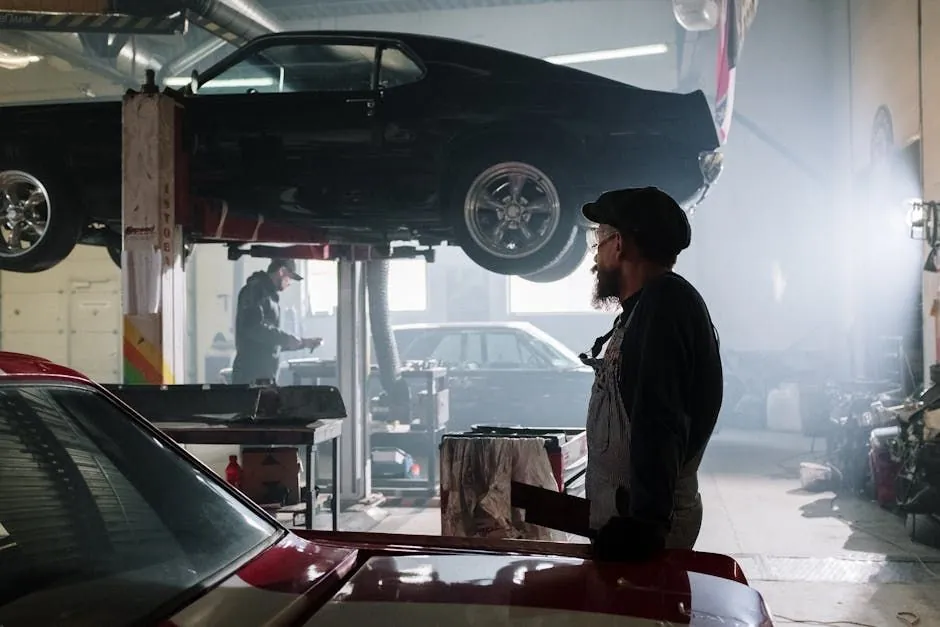
ASE Certified Master Technician performing engine diagnostics
Our Process

What Happens During a Full Engine Diagnostic?

You don’t need to know what’s wrong before you come in. Just tell us what your car is doing, and we handle the rest.

01

You Describe the Symptoms

You describe the symptoms. When did it start? Is it constant or intermittent? Any specific conditions that make it worse? The more detail you give us, the faster we narrow things down.

02

We Scan for Fault Codes

We scan for fault codes. Every diagnostic starts with an OBD-II scan to pull stored and pending trouble codes. But we don’t stop there.

03

We Run Factory Software

We run factory software. Using the make-specific diagnostic tool for your vehicle, we access every control module, check for communication faults between systems, and pull freeze frame data that shows exactly what the engine was doing when the fault occurred.

04

We Analyze Live Data

We analyze live data. Fuel trim numbers, oxygen sensor readings, timing advance, boost pressure on turbocharged engines. These real-time readings tell us whether a sensor is drifting out of spec or a mechanical component is failing, even if it hasn’t set a code yet.

05

We Inspect and Test

We inspect and test. Visual inspection of the engine bay, wiring harnesses, vacuum lines, and fluid levels. Component testing on anything the data points to, whether it’s an ignition coil, fuel injector, or sensor.

06

We Explain What We Found

We explain what we found. You get a written report with photos and a plain-language explanation of the problem. No jargon, no confusion. We include an itemized estimate with parts and labor, and nothing happens until you approve it.

Ready to find out what’s really going on? Call 310-504-0089 or schedule online.

Safety

Can I Drive with My Check Engine Light On?

It depends on whether the light is solid or flashing.

01

Solid Check Engine Light

A solid check engine light usually means something needs attention but isn’t an emergency. You can typically drive home or to the shop without causing additional damage. Common causes of a steady light include oxygen sensor issues, catalytic converter efficiency codes, evaporative emissions leaks, and mass airflow sensor faults. Don’t ignore it, but don’t panic either.

02

Flashing Check Engine Light

A flashing check engine light is different. A flashing light means active engine misfire, and that’s serious. Unburned fuel is being pushed into the exhaust system, which can overheat and damage the catalytic converter. On turbocharged German cars, sustained misfires can also damage the turbocharger. Pull over when it’s safe and call for a tow.

Stop Driving If...

Other Warning Signs That Mean Stop Driving

01

Engine Overheating

Engine overheating (temperature gauge in the red)

02

Oil Pressure Warning

Oil pressure warning light

03

Exhaust Smoke

Visible exhaust smoke (white, blue, or black)

04

Engine Knocking

Engine knocking or pinging under acceleration

05

Loss of Power

Sudden loss of power or stalling at speed

California has the strictest emissions standards in the country. A check engine light means your car won’t pass a SMOG inspection. The longer you wait, the more a small sensor issue can cascade into expensive component failures. Getting a diagnostic early usually costs less than waiting.

Reviews

What Do Customers Say About Our Diagnostic Work?

185 Google reviews. Every single one is five stars.

I
Israel B.
Google Review
★★★★★

After taking it to multiple mechanics in the area with no one able to figure out the issue, I finally brought it to Shawn. Shawn got back to me the same day with a solution.

M
Mia C.
Google Review
★★★★★

The dealership claimed it was just a battery issue. When the problem persisted, I turned to South Bay Luxury Motors and they quickly identified and resolved the actual issue with precision.

J
Dr. Jake B.
Google Review
★★★★★

I have a Porsche 911 and I am very selective on who I have work on my car. Expert level knowledge on luxury cars.

K
Kimani Gilbert
Google Review
★★★★★

Type of shop that fixes the problem other shops couldn’t figure out, and everyone on the team is a standup guy.

M
Mike Uesugi
Google Review
★★★★★

What I appreciated most was their honesty; they provided a 25-point inspection... It is rare to find a shop that treats both the customer and the car with this much respect.

J
Jay Fustini
Google Review
★★★★★

Returning customer. I described the issue with my vehicle and Elmer diagnosed it on the spot, misfiring... Professional, knowledgeable, and extremely friendly.

Make-Specific

Engine Diagnostics for Porsche, BMW, Audi, and Mercedes-Benz

Every German manufacturer builds its own electronics architecture. That’s why a scanner that works perfectly on a BMW might miss half the modules in a Porsche. We run make-specific diagnostics on every vehicle because the electronics demand it.

Porsche

Porsche uses the most proprietary systems of any German brand. The PIWIS Tester is the only tool that accesses Porsche-specific modules for engine management, transmission control, PDCC suspension, and Sport Chrono. We handle 911, Cayenne, Macan, and Panamera diagnostics with factory-level depth. Schedule a Porsche engine diagnostic.

BMW

BMW vehicles rely on a network of interconnected modules that communicate over a CAN-bus system. When one module throws an error, it can trigger faults across multiple systems. The ISTA diagnostic platform lets us trace the actual source instead of chasing cascading codes. N52, N54, N55, B58, and S-series engines each have their own fault patterns that we’ve diagnosed hundreds of times. Learn about BMW check engine light diagnosis.

Audi

Audi shares much of its electronic platform with Volkswagen, but the luxury models add layers of complexity. ODIS handles everything from mechatronic unit diagnosis on DSG transmissions to turbo boost control calibration on TFSI engines. Quattro all-wheel-drive systems have their own module that most generic tools can’t access.

Mercedes-Benz

Mercedes-Benz has one of the densest electronic architectures in the automotive world. Xentry (Mercedes Star Diagnostic) is required to properly diagnose everything from AIRMATIC suspension faults to transmission adaptive learning resets. We see a lot of sensor and module communication faults on E-Class, GLE, and G-Wagon models.

Visit Us

Our Location: Engine Diagnostics in Torrance

South Bay Luxury Motors

4040 Spencer St, Unit Q, Torrance, CA 90503

Phone: 310-504-0089

We offer concierge service for customers throughout the South Bay. We can pick up your vehicle or arrange drop-off if you can’t make it to the shop. Our team is bilingual in English and Spanish.

By Make

Engine Diagnostics by Make

Each German manufacturer uses proprietary engine management systems. Select your make for model-specific diagnostic information and common fault patterns.

Service Area

Where Do We Provide Engine Diagnostics in the South Bay?

Our Torrance shop provides engine diagnostics to drivers throughout the South Bay and greater Los Angeles area.

Primary Service Areas
TorranceRedondo BeachManhattan BeachPalos VerdesHermosa Beach
Extended Service Areas
GardenaCarsonHawthorneRolling HillsRancho Palos VerdesLong BeachSan PedroWest Los Angeles
FAQ

FAQ: Engine Diagnostics Questions

A full diagnostic at South Bay Luxury Motors includes an OBD-II code scan, factory software deep-scan specific to your vehicle’s make, live data analysis, visual inspection, and component testing. You receive a written report with photos explaining what we found and what it’ll cost to fix.
Most diagnostics take between one and three hours depending on the complexity of the issue. Intermittent problems that don’t set a permanent code can take longer because we may need to drive the vehicle under specific conditions to reproduce the fault. We’ll give you a time estimate when you drop off.
A code scan reads the trouble codes stored in your car’s computer. It tells you a symptom, not a cause. A full diagnostic uses those codes as a starting point, then tests components, analyzes live data, and traces the fault to its root cause. Think of it this way: a code scan tells you the engine is misfiring. A diagnostic tells you which coil pack is failing and why.
No. We use the same factory diagnostic software that authorized dealerships use, including PIWIS for Porsche, ISTA for BMW, ODIS for Audi, and Xentry for Mercedes-Benz. You get dealership-level diagnostic depth at independent shop pricing. Many of our customers come to us after dealership diagnostics failed to find the actual problem.
A flashing check engine light means your engine is actively misfiring. This is more serious than a steady light. Continued driving can damage the catalytic converter and, on turbocharged German engines, the turbocharger itself. Pull over safely and have the vehicle towed to a shop for diagnosis.
Intermittent check engine lights usually point to a fault that only occurs under certain conditions, like a sensor that reads out of range when the engine is cold or a loose connection that breaks contact over bumps. These are some of the hardest problems to diagnose because the fault may not be active when the car is in the shop. Our factory tools can pull freeze frame data and pending codes that help us catch these intermittent issues.
Yes. Modern German vehicles use integrated control systems where the engine and transmission share data constantly. Our diagnostic tools access both engine and transmission modules. We’ve diagnosed transmission faults that other shops missed because they only scanned the engine side. South Bay Luxury Motors handles transmission diagnostics and external transmission service, though we refer out internal transmission rebuilds.
Yes. We perform pre-purchase inspections on European vehicles using the same factory diagnostic tools we use for engine diagnostics. If you’re buying a used Porsche, BMW, Audi, or Mercedes, a pre-purchase inspection can reveal hidden problems that affect the vehicle’s value and reliability. Call us at 310-504-0089 to schedule one.
Every diagnostic comes with a written report that includes photos, a plain-language explanation of findings, and an itemized estimate for any recommended repairs. We explain the problem, the fix, and the cost before any work begins. You approve everything first.
Call us at 310-504-0089 or visit our contact page to schedule online. We offer flexible scheduling and concierge pickup and drop-off service throughout the South Bay.
Get Started

Not Sure What’s Wrong with Your Car?

That’s exactly what we’re here for. Shawn Baker, ASE Certified Master Technician with over 20 years of experience, leads every complex diagnosis personally. Backed by 185 five-star Google reviews and dealer-level factory tools, we find problems that other shops and dealerships miss.

Schedule Your Engine Diagnostic in Torrance Call 310-504-0089
Engine Diagnostics Reference

The vocabulary behind engine diagnosis

Four concepts at the core of European engine diagnosis.

On-board diagnostics

The vehicle's self-diagnostic system, standardized as OBD-II on every U.S. car since 1996. A scan tool plugged into the diagnostic port pulls fault codes from the engine, transmission, ABS, airbag, and HVAC modules so a technician can isolate the actual cause behind a warning light.

Spark plug

The component that ignites the air-fuel mixture in each cylinder of a gasoline engine. German cars typically use platinum or iridium plugs that last 60,000-100,000 miles; worn plugs cause misfires, rough idle, and a check-engine light.

ASE certification

Credential issued by the National Institute for Automotive Service Excellence after an ASE-accredited written exam plus two years of verified work experience. Master Technician status requires passing all eight automobile service certification tests.

Original equipment manufacturer

OEM refers to parts produced by or for the vehicle's original manufacturer to the same specification used on the assembly line. On German cars, OEM and quality aftermarket parts often outperform generic equivalents because the engineered tolerances are tighter.