
Reliability & Longevity
6 Signs a Used Audi Is Worth Buying
I'm Shawn Baker, an ASE Certified Master Technician and the founder of Luxury Motors of South Bay in Hermosa Beach, and the question I get more than almost any other from South Bay buyers is whether a used Audi is worth it. Here is the honest answer up front: a used Audi is worth buying when it shows a documented service history, the right oil and fluids, healthy timing and cooling components, clean electronics, and it passes a proper pre-purchase inspection. Audi reliability is less about the badge and far more about how the specific car in front of you was treated.
I work on Porsche, Audi, Mercedes-Benz, and BMW every day with dealer-level diagnostic tools, and I inspect a lot of used Audis for buyers before they sign anything. So this is the buying-decision lens, not the ownership one. If you already own an Audi and want the known trouble spots by model, that is a different article. This one is about the green flags I look for before you hand over money.
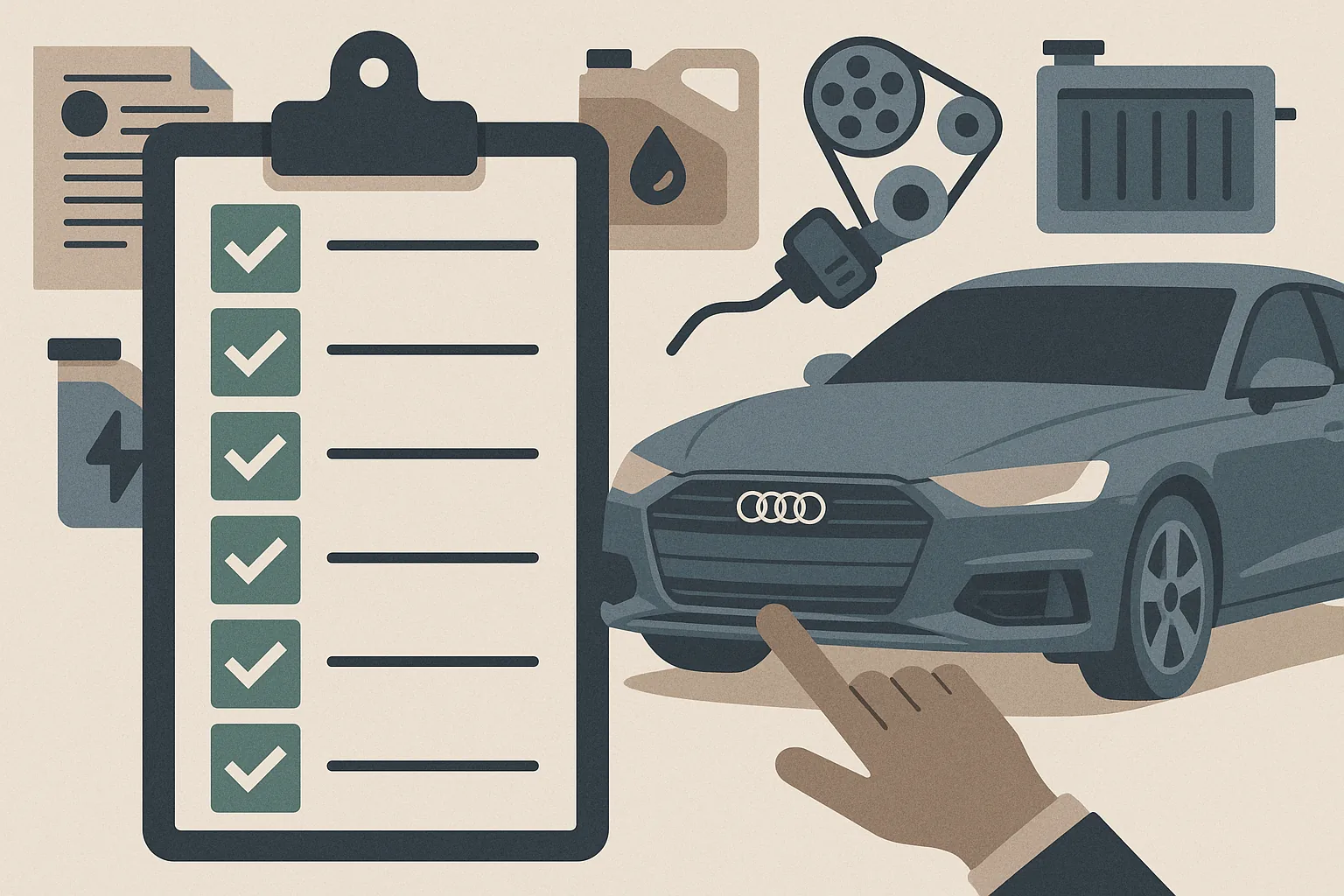
Illustrative buyer checklist, not a guarantee. Every used car is its own case, which is why the inspection is the deciding step.
What makes a used Audi worth buying?
A used Audi is worth buying when the car has a documented maintenance trail and passes a pre-purchase inspection with no major deferred work. The badge does not tell you reliability; the paperwork and the lift do. Below are the six signs I check, in the order I check them, so you can walk into a sale knowing what a good Audi actually looks like.
1. It comes with real service records
The single strongest green flag is a paper trail. When a seller can hand you dated invoices showing oil services, fluid changes, and repairs done on schedule, you are looking at a car someone actually cared for.
Records tell you two things at once: that the maintenance happened, and that it happened to spec. A stack of receipts from a shop that used the correct Audi-approved oil is worth more than a verbal "it was always dealer serviced" with nothing to back it. If the history is a blank, treat the price like the car has needs you cannot yet see, because it probably does.
2. The oil is clean and the car takes the right spec
Pop the oil cap and pull the dipstick. Clean, honey-to-amber oil at the correct level is a good sign; sludge, a burnt smell, or oil that is way down suggests skipped services or a car that burns oil without anyone topping it.
Audi engines want a specific VW/Audi oil approval, not whatever is cheapest on the shelf, and using the wrong oil is one of the quietly expensive mistakes I see. A seller who knows which spec their car takes has usually been doing it right. If the oil looks neglected, that is not a dealbreaker on its own, but it moves the car straight to the inspection column before any money talk.
3. The timing components and water pump have been handled
Many Audi engines run a timing belt or chain system plus a water pump that are wear items on a schedule, and they are among the more involved jobs on the car. This is where records earn their keep.
If the timing service and water pump have already been done at the right interval, that is a big green flag and real money you do not have to spend soon. If they have not, that is not a reason to walk away, but it is a reason to factor the upcoming cost into your offer. Our cooling system repair work covers water pumps and thermostats, so I know what these jobs run, and I would rather you negotiate with the number in hand than get surprised a year in.
4. The cooling system is healthy
Audis, like the other German cars I work on, lean on plastic cooling components that get brittle with age and heat. In the South Bay, traffic on the 405 and summer temperatures push the cooling system hard, so this is not a minor line item here.
Look for a coolant reservoir at the right level with clean fluid, no crusty residue around hose connections, and no sweet smell of coolant when the car is warm. A used Audi whose thermostat, water pump, and hoses have been kept current is one that will hold up as a daily driver. Overheating is the kind of problem that turns a cheap fix into an engine repair if it gets ignored, so I check this carefully on every buyer inspection.
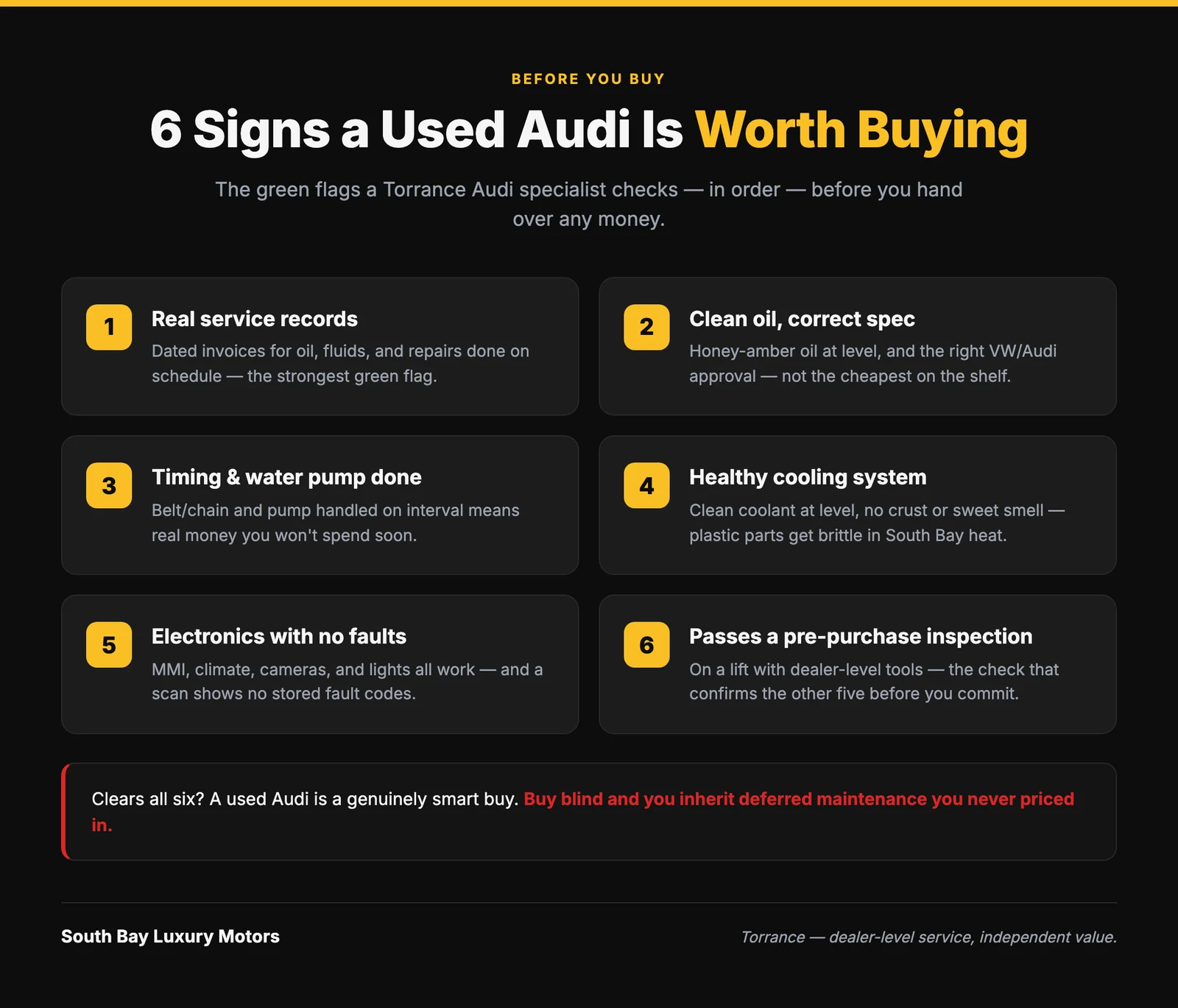
Representative comparison for illustration. The only way to know which side a specific car falls on is a pre-purchase inspection.
5. The electronics all work and there are no stored faults
Audi puts a lot of technology in the car, and that technology is where a lot of used-car surprises hide. Test everything: the MMI screen, climate control, windows, seat adjustments, cameras, and every warning light.
A test drive shows you what is broken right now. What it will not show you is a stored fault code sitting quietly in a control module, waiting to become a dashboard light next month. That is exactly what our engine and electrical diagnostic scan catches. When a used Audi comes back with clean modules and no pending codes, that is a strong sign the previous owner stayed on top of things.
6. It passes an independent pre-purchase inspection
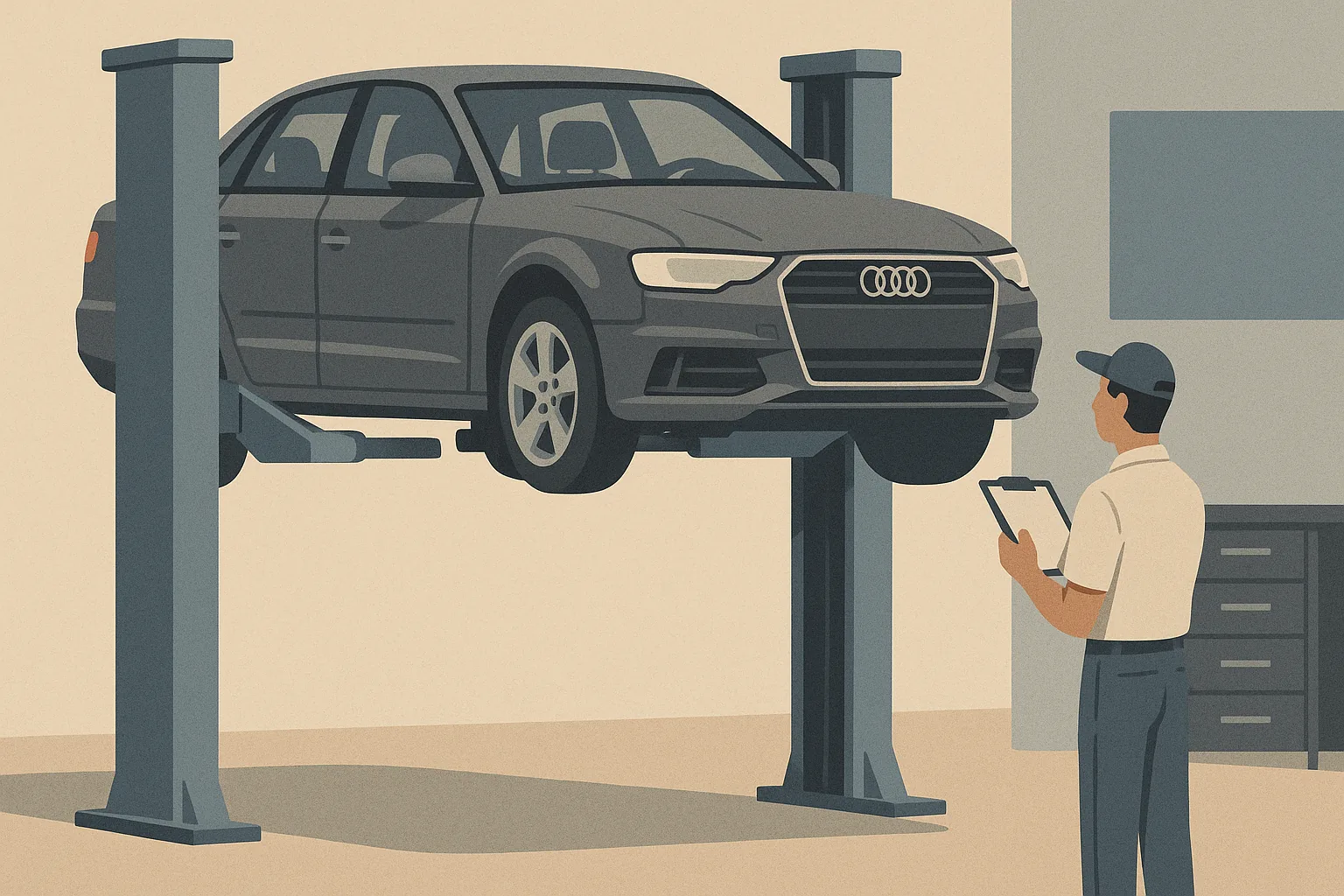
This is the sign that confirms the other five, and it is the one I will not let a buyer skip. Every earlier check is you doing your homework; the inspection is a specialist putting the car on a lift and telling you the truth before you commit.
A proper pre-purchase inspection puts the car in the air, connects dealer-level tools, and surfaces oil leaks, worn brakes, cooling issues, and stored codes that a driveway look will never reveal. Our Audi specialist team does these all the time, and the inspection cost is small next to the repairs it can catch. Just as important, whatever we find gives you real room to negotiate the price. If you want the full walkthrough of how one works, read our pre-purchase inspection guide.
How to use these 6 signs when you shop
Think of the six signs as a funnel. The records, the oil, and a quick look at the cooling system tell you whether a car is even worth your time. The timing and water pump history, plus a full electronics check, tell you what the car will cost you over the next couple of years. And the pre-purchase inspection settles it.
If a car clears all six, a used Audi is a genuinely smart buy, and often a better value than a comparable new car once someone else has absorbed the first years of depreciation. If it fails several, that is not always a no. Sometimes it just means you negotiate the known work into the price. The mistake is buying blind and inheriting deferred maintenance you never priced in.
The bottom line on used Audi reliability
A used Audi is worth buying when it has documented service, clean oil in the right spec, healthy timing and cooling components, working electronics with no stored faults, and a clean pre-purchase inspection. Get those, and Audi reliability stops being a gamble and becomes a known quantity.
At Luxury Motors of South Bay we are an independent Porsche, Audi, Mercedes-Benz, and BMW specialist in Hermosa Beach. We inspect used Audis for buyers with the same tier of tools the dealer uses, we tell you exactly what we find, and we never upsell work the car does not need. If you have a used Audi you are considering, book a pre-purchase inspection or call us at 310-504-0089 before you buy.
Frequently Asked Questions
Are used Audis reliable?
A used Audi can be very reliable when it has been maintained on schedule with the correct oil and fluids, and when the known wear items have been handled. Audi reliability is less about the badge and more about the specific car's service history. A well-kept A4 or Q5 with documented maintenance is a different animal than a neglected one with the same mileage. That is why a pre-purchase inspection matters more on an Audi than on an economy car.
What is the best used Audi to buy?
The models with the broadest parts support and the most predictable maintenance tend to be the A4, A6, and Q5. Within any model, the better buy is the one with clean records and a healthy inspection, not the one with the lowest mileage on paper. I would rather see a higher-mileage Audi with a paper trail than a low-mileage car with unknown history.
How many miles is too many for a used Audi?
There is no single cutoff. A well-maintained Audi with 100,000 miles and full records can be a smarter buy than a neglected one at 60,000. What matters is whether the timing components, water pump, and oil service have been kept up, and what a pre-purchase inspection finds today. Mileage is one data point, not the verdict.
Should I get a pre-purchase inspection on a used Audi?
Yes, always, before money changes hands. A pre-purchase inspection puts the car on a lift and connects it to dealer-level diagnostic tools, which surfaces oil leaks, cooling issues, and stored fault codes a test drive will never show. The inspection cost is small next to the repairs it can catch, and it gives you real room to negotiate on price.
Do Audis hold up as daily drivers in the South Bay?
They do when they are maintained to spec. South Bay traffic and heat are hard on cooling systems and brakes, so a used Audi that has had its water pump, thermostat, and fluids kept current will hold up well as a daily driver. The buyers who have trouble are usually the ones who skipped the inspection and inherited deferred maintenance.
Thinking about a used Audi? Get a pre-purchase inspection before you buy.
Learn more