
Ownership and Maintenance
5 Signs of a Bad Alternator on a German Car
The main signs of a bad alternator are a charging warning, dim or flickering lights, slow starts, a burning smell, and stalling. I'm Shawn Baker, founder and ASE Certified Master Technician at Luxury Motors of South Bay in Hermosa Beach, and alternator faults are one of the main reasons a healthy-looking car comes in for electrical diagnostics.
In a recent post we covered BMW battery replacement and why a new battery has to be registered. This post picks up where that one left off. A battery stores power, but the alternator makes it, and a weak alternator can look a lot like a tired battery.
What does an alternator do on a German car?
The alternator charges the battery and powers the car's electronics while the engine runs. On a modern BMW, Mercedes-Benz, Audi, or Porsche, that's a heavy load. Think of the control modules, heated seats, lighting, pumps, fans, and the infotainment screen all running at once.
Many German cars also keep track of the battery they're charging. BMW's service bulletin SI B61 30 14 tells technicians to register each new battery with the diagnostic system. Keep that in mind when a warning appears, because the car is reporting what it measures.
1. A battery or charging warning on the dash
A battery warning light usually points to a charging problem, and a weak battery is only one possible cause. In AAA's guide to alternator symptoms, AAA's Travis Mock says the light "would indicate a charging issue." Treat it as a reason to test the charging system soon.
On German cars, the message may be text rather than a symbol. You might see a charging system fault, increased battery discharge, or a note that some features have been switched off. Those messages all deserve a test, even when the car still starts.
2. Lights that dim, flicker, or get too bright
Lights that dim, flicker, or brighten for no reason are a classic alternator sign. AAA's Mock calls "the dimming of lights or excessive light brightness" one of the most common symptoms. Watch the headlights and dash at idle, then again as the engine revs.
Unsteady voltage shows up in other places too. Here's what owners tend to notice:
- Headlights that pulse at a stoplight on PCH and steady up when you pull away
- Interior lights that dim when the climate control fan speeds up
- A screen or gauge cluster that flickers or reboots
- Auto start-stop that quietly stops working
- Comfort features, like seat heaters, that shut off on their own
Any one of these can also come from wiring or a weak battery. Several of them together point more strongly at charging.
3. Slow starts or a battery that keeps going flat
A battery that keeps dying, even after it's replaced, is a strong hint the alternator isn't recharging it. AAA notes that a failing alternator can drain the battery until the car won't start. Have the whole charging system checked, not just the battery.
Short South Bay trips make this worse. A drive from Hermosa to Manhattan Beach and back doesn't give a weak alternator much time to catch up. The battery slowly runs down, and one cool morning the car cranks slowly or not at all.
This is where many owners lose money. They buy a new battery, the car starts for a week, and then it's flat again. Our electrical problem symptoms guide explains the jump-start test that helps separate the two.
4. A burning smell or a whine from the engine bay
A burning electrical smell or a new whine from the front of the engine can point to the alternator. AAA's Mock says an alternator issue "could create an electric burning smell," which can also involve the drive belt. Pull over and have it inspected if you smell hot wiring.
The alternator spins on bearings and is driven by a belt. A worn bearing can whine or grind, and a slipping belt can squeal on a cold start. Get any new noise checked before a long drive.
5. The car stalls or dies while you're driving
A car that dies while driving can mean the alternator stopped charging and the battery ran out. AAA notes a jump may restart the engine, but it advises against driving on after a stall. Get the car tested before you rely on it again.
That matters before a holiday road trip. A drive up the coast or out to the desert puts hours of load on the charging system. If the battery light has flickered on your commute, have it checked before you load the car.
How do you tell a bad alternator from a bad battery?
You test both, because the symptoms overlap so much. Our electrical guide gives a quick rule. If the car runs for days after a jump, suspect the battery, and if it dies within minutes, suspect the alternator. Use that as a starting point, never as the final answer.
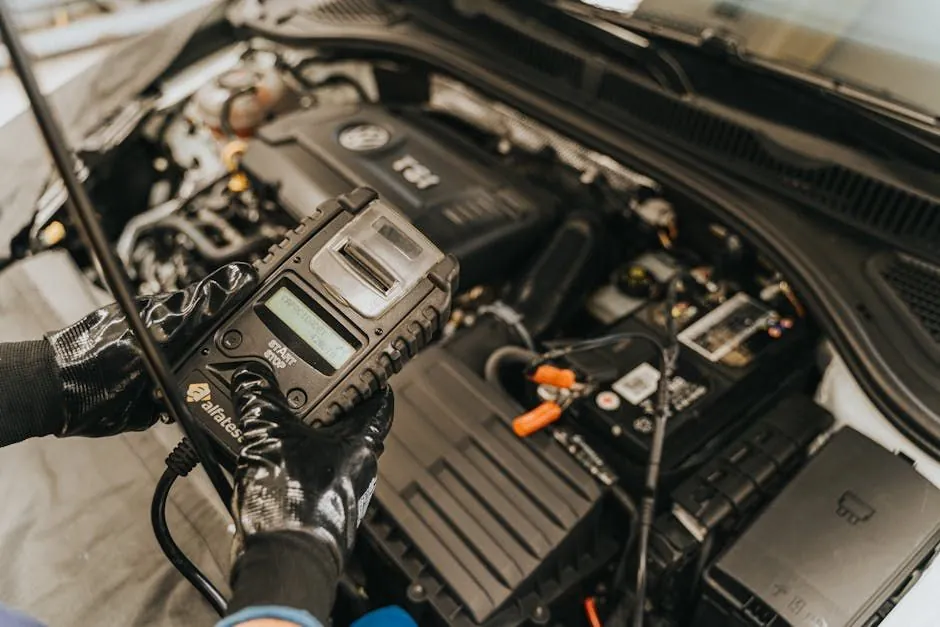
A proper test looks at more than one number. We check battery health, cold cranking amps, alternator output, and voltage regulator function, then look for stored fault codes. On cars with active power management, the control modules often record exactly when voltage dropped.
A battery drain is the third possibility. Something staying awake after you lock the car can flatten a good battery with a good alternator. That needs a different test, and a new alternator won't fix it.
What should German car owners do next?
Get the charging system tested as soon as you see the battery light, dimming lights, or repeat dead batteries. Test before you replace anything. If the battery is replaced, use the correct type and register it where the car requires it. That order saves parts and repeat visits.
At Luxury Motors of South Bay, we diagnose BMW, Mercedes-Benz, Audi, and Porsche electrical faults with dealer-level tools. If you're in Hermosa Beach or nearby, we can test the battery and alternator together and show you which one is at fault.
I'm Shawn Baker, founder and ASE Certified Master Technician at Luxury Motors of South Bay in Hermosa Beach, and a Marine Corps veteran. I've spent more than 20 years working on Porsche, Audi, Mercedes-Benz, and BMW with dealer-level tools, and charging system diagnosis is everyday work at our shop. If your battery light is on, get in touch and we'll test it before you buy parts.
Frequently Asked Questions
What are the first signs of a bad alternator?
A battery or charging warning on the dash and lights that dim or flicker are the most common early signs. AAA's car care team names both as typical alternator symptoms. Slow starts and a battery that keeps going flat often follow.
Can a bad alternator ruin a new battery?
It can wear one down. If the alternator isn't recharging properly, the car runs on stored battery power until the battery is drained. Repeated deep drains are hard on any battery, which is why the charging system should be tested whenever a battery is replaced.
Is it safe to drive with a bad alternator?
It's risky. Once the battery is drained, the engine can stall, and AAA advises against continuing to drive after a stall. If the battery light comes on while you're driving, head somewhere safe and have the car checked before a longer trip.
How do you tell a bad alternator from a bad battery?
Test both, because the symptoms overlap. A car that starts fine after a jump and then runs for days usually points to the battery. A car that dies again soon after the cables come off, or dims while driving, points to the alternator.
Battery light on or a new battery that keeps going flat? Bring your car in for a charging system test before you buy more parts.
Learn more