
Ownership and Maintenance
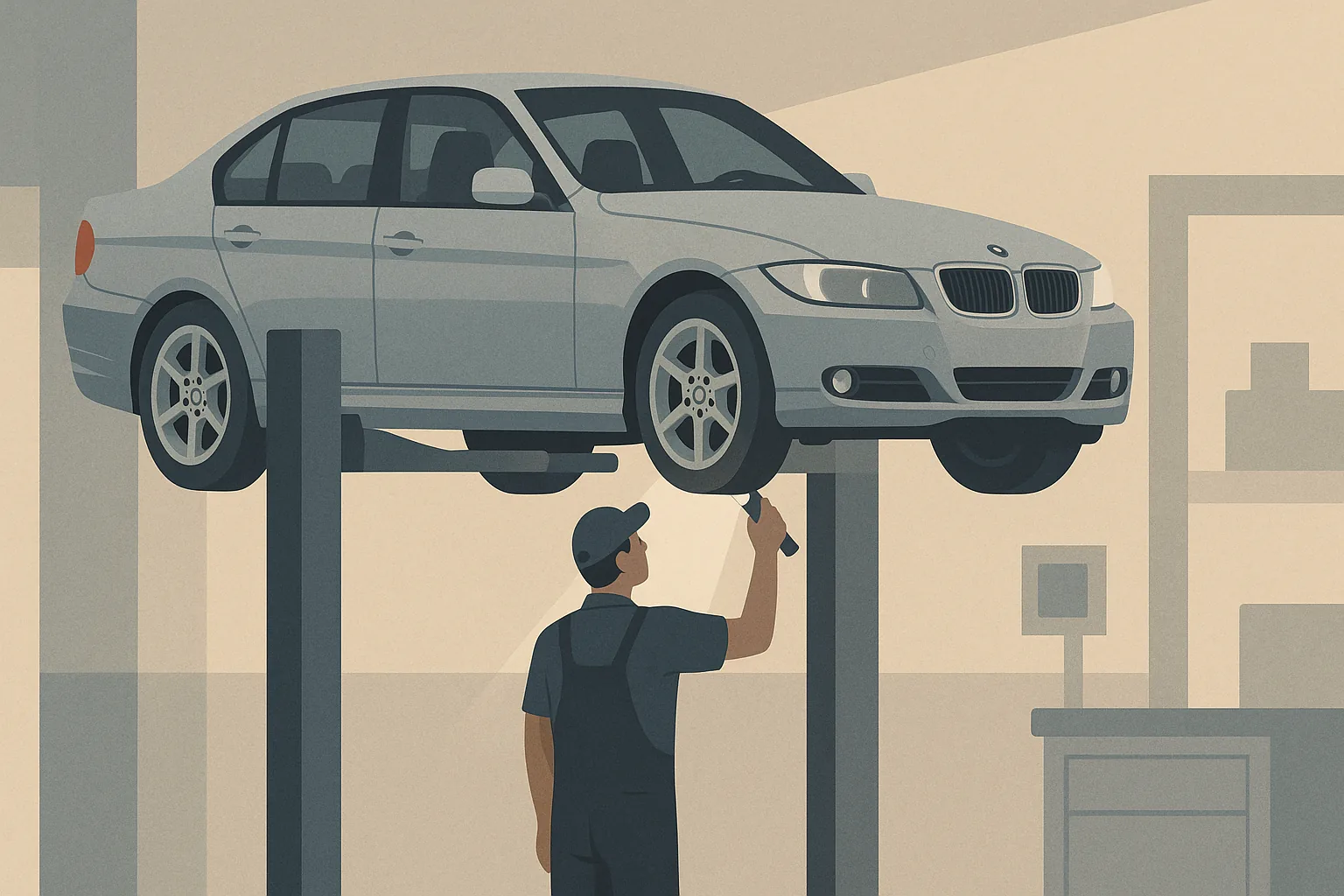
6 Red Flags a Pre-Purchase Inspection Catches on a Used BMW
The most common red flags during a pre-purchase inspection are cleared or stored fault codes, cooling-system leaks, oil leaks from the valve-cover and oil-filter-housing gaskets, a service history that does not match the car, signs of prior accident repair, and worn suspension, tires, and brakes that point to skipped maintenance. Any one of them can turn a sharp-looking used BMW into a car you overpay for, and every one of them hides from a test drive.
I'm Shawn Baker, founder and master technician at Luxury Motors of South Bay. We are now at 505 Pacific Coast Highway in Hermosa Beach, and a pre-purchase inspection is one of the things South Bay drivers ask us for most before they buy. A test drive tells you how a car feels for fifteen minutes on a good day. It cannot show you what the car's computer remembers or what a lift reveals from underneath. Here are the six red flags I look for every time, what each one actually means, and why catching it before you sign is the cheapest insurance you can buy.
1. Cleared or stored fault codes the seller hoped you would not see
A fault code is the car telling on itself. When a BMW's computer detects a problem, it stores a code and, in many cases, a freeze-frame snapshot of the conditions when the fault happened. During a pre-purchase inspection we read all of that with a dealer-level scan tool, the same tier the dealer uses, so we see the car's honest history and not just its shine.
The red flag is not only an active code. It is a car whose memory looks suspiciously fresh. If the readiness monitors have not all completed, or the adaptations look like they were just reset, that often means the codes were cleared or the battery was disconnected shortly before your visit. An honest seller has no reason to wipe the car's memory the morning you show up. When I see that pattern on a used BMW in Redondo Beach or Manhattan Beach, I slow down and look harder, because someone was trying to hand you a clean-looking scan that the car had not earned.
2. Cooling-system leaks and coolant residue
If you take one mechanical fact away, make it this: BMW cooling systems use a lot of plastic, and plastic has a service life. Expansion tanks, thermostat housings, and water-pump components get brittle with heat cycles, and they tend to start weeping somewhere between 80,000 and 100,000 miles. This is normal aging, not a design disaster, but you do not want to discover it the week after you buy.
On the lift we look for the tell-tale signs a test drive hides: dried coolant crust around seams and hose connections, a low or stained expansion tank, and residue tracking down the block. A cooling system that was recently refreshed is money you do not have to spend and a genuine plus. One that is original and crusty at high mileage is not a dealbreaker, but it is real money you should be pricing into your offer instead of inheriting by surprise.
3. Oil leaks from the valve-cover and oil-filter-housing gaskets
Oil leaks are the other classic red flag on a used BMW, and they are the reason a lift matters so much. The valve-cover gasket and the oil-filter-housing gasket are the two usual suspects. As the rubber ages, they start to weep. Caught early, that is a manageable gasket job. Ignored, oil can track down onto the exhaust, where it bakes and creates that hot-oil smell, or onto a belt, where it becomes a bigger problem than a gasket.
You will almost never spot this on a test drive. From underneath, I can. A light film starting to form tells me the car is simply old enough to need normal service, which is fine as long as you know it going in. A soaked, oily mess that has been building for a long time tells me the previous owner was not staying ahead of anything, and that changes what the car is worth. Either way, you deserve to see it before you own it, not after.
4. A service history that does not match the car
The service records are the real price tag, and the red flag is when the paperwork and the car disagree. A BMW stores a surprising amount of its own service and condition data. When a seller tells me the car just had major work done but the car's own computer and my inspection say otherwise, that gap is the problem, not any single part.
What I want to see is a consistent trail: oil and fluid services on time with the correct BMW-approved spec, cooling or gasket work that lines up with the mileage, and no long stretches where the car went years untouched. Gaps are not automatic dealbreakers. They just tell me where to inspect harder. But a story that does not match the metal is a reason to be careful, because if the maintenance history was massaged, you have to assume the condition was too.
5. Signs of prior accident or hidden body repair
Plenty of used cars have been in a fender-bender, and a good repair is not the end of the world. The red flag is undisclosed structural or collision repair, because that is the kind of thing that affects safety and value long after the paint looks perfect. A clean listing photo and a shiny panel do not tell you what happened to the car before you got there.
During the inspection I look for the physical fingerprints: uneven panel gaps, paint that does not match from one panel to the next, overspray on trim and seals, and hardware or welds that do not look factory. Pair that with a VIN history report and you get a much fuller picture than the seller's description. A properly repaired car with an honest story is one thing. A car hiding frame or airbag-related damage under fresh paint is a very different purchase, and I would rather you know which one you are looking at.
6. Worn suspension, tires, and brakes that signal deferred maintenance
The last red flag is the pile of smaller wear items that quietly add up. On a used BMW I check the tires for uneven wear, which often points to worn suspension or an alignment that has been ignored. I look at control-arm bushings, shocks, and struts, and I measure the brakes. None of these are exotic, but together they tell me whether the car was maintained or just driven until something forced a repair.
Here in the South Bay, stop-and-go traffic on Pacific Coast Highway and the 405 is harder on brakes and tires than a highway-miles number suggests, and performance BMWs wear bigger, pricier brakes. Finding all four corners worn at once is a sign the previous owner was deferring upkeep across the board. That is not a reason to walk away automatically, but it is a stack of near-term costs you should see itemized, so the price reflects the car you are actually buying.
The honest bottom line
A pre-purchase inspection is not about finding a used BMW with zero needs, because that car mostly does not exist. It is about buying with your eyes open. Cleared codes, cooling leaks, weeping gaskets, a history that does not match, hidden body repair, and stacked-up wear are the six things I catch most often, and every one of them is easier to deal with as a number on an estimate than as a surprise after you own the car.
Buy a documented example, get an independent set of eyes with the right tools, and price in what the inspection finds. That is how a used BMW ends up in the reliable column instead of the money-pit stories people trade around. It is the same standard I would want on a car for my own family.
I'm Shawn Baker, founder and master technician at Luxury Motors of South Bay in Hermosa Beach, and a Marine Corps veteran. I've spent my career diagnosing and servicing Porsche, Audi, Mercedes-Benz, and BMW with dealer-level tools, and I inspect used BMWs for South Bay buyers from Hermosa Beach, Manhattan Beach, and Redondo Beach every week. If you are weighing a specific car, schedule a pre-purchase inspection before you sign, and let the car tell you the truth first.
Frequently Asked Questions
What are common red flags during a pre-purchase inspection?
The most common red flags are cleared or stored fault codes the seller hoped you would not see, cooling-system leaks, oil leaks from the valve-cover and oil-filter-housing gaskets, a service history that does not match the car's own data, signs of prior accident repair, and worn suspension, tires, and brakes that point to skipped maintenance. A proper inspection with dealer-level scan tools and a lift catches all six before you own them.
Can a pre-purchase inspection tell if fault codes were cleared?
Often, yes. When we plug in, we can see whether the readiness monitors have all completed and whether the car's adaptations look freshly reset. Codes that were wiped or a battery disconnected right before your visit leave fingerprints. That pattern tells me to look harder, because an honest seller has no reason to clear the car's memory the morning you show up.
How long does a pre-purchase inspection take on a used BMW?
Plan on a couple of hours of shop time. We put the car on a lift, read the stored fault and service data off its computer, check the cooling system and gaskets for leaks, look for prior body repair, and go over the suspension, tires, and brakes. You get an itemized list of what is healthy and what needs attention, which is your leverage to negotiate or your reason to walk.
Do I still need an inspection on a certified pre-owned BMW?
It is still worth it. A certified pre-owned checklist is a good baseline, but it is done by the selling party, not by someone working for you. An independent pre-purchase inspection gives you a second, unbiased read with the same tier of tools, and it costs a fraction of the surprises it can save you from on a used BMW.
Weighing a specific used BMW in the South Bay? Get a pre-purchase inspection before you sign.
Learn more