

P
Paola C.
Google Review
★★★★★
Porsche quoted me $5,000 for a brake job. I called Shawn, and over the phone, he gave me a price that was a fraction of that.
Meta Title: BMW Oil Leak Repair in Hermosa Beach, CA | Luxury Motors of South Bay
Meta Description: BMW oil leak diagnosis and repair in Hermosa Beach. Valve cover gaskets, oil filter housing, oil pan gaskets. ASE Master Tech. Call 310-504-0089.
URL: /oil-leak-repair/bmw-oil-leak-repair/
Oil spots on your driveway, a burning oil smell after you park, low oil level warnings between services. Luxury Motors of South Bay provides BMW oil leak diagnosis and gasket replacement in Hermosa Beach, CA, stopping leaks before they cause engine damage and protecting long-term engine longevity. From valve cover gaskets and oil filter housing seals to oil pan gaskets on N52, N54, and N55 engines, we pinpoint the source and fix it right.
The most common BMW oil leak sources are the valve cover gasket, oil filter housing gasket, and oil pan gasket. These rubber and composite seals harden from repeated heat cycling, especially on N52, N54, and N55 engines.
BMW engines run at higher operating temperatures than most vehicles. That’s by design. It improves fuel efficiency and reduces emissions. But it also means the gaskets and seals take more punishment with every drive cycle.
Over tens of thousands of miles, gasket materials shrink, crack, and lose their ability to hold a seal. The oil filter housing gasket on a six-cylinder BMW is a perfect example. It sits near the top of the engine where heat concentrates, and when it fails, oil drips down onto the belts, hoses, and exhaust below.
The PCV system (positive crankcase ventilation) adds another layer. When the PCV valve fails or the crankcase ventilation hose cracks, pressure builds inside the engine. That excess crankcase pressure forces oil past seals that would otherwise hold. On N54 and N55 turbocharged engines, PCV failure is a known trigger for oil leaks at multiple points.
Heat cycling in Southern California accelerates the process. Short drives to the beach followed by stop-and-go on the 405 create rapid temperature swings that stress gasket materials more than steady highway cruising would.
Sometimes the signs are obvious. Other times, a leak goes unnoticed for months until real damage is done.
Oil spots under the car. The most visible symptom. Fresh engine oil is amber to dark brown. If you see spots where you park, check the size and frequency. A spot that grows week over week means the leak is getting worse.
Burning oil smell. When oil leaks from the valve cover gasket or oil filter housing gasket, it drips onto hot exhaust manifolds and turbo piping. You’ll notice the smell after shutting the engine off. It’s acrid. Hard to miss once you know what it is.
Low oil level between services. Your BMW’s oil consumption between changes should be minimal. If you’re adding a quart every few weeks, oil is going somewhere. It’s either leaking externally or burning internally, and a visual inspection can usually tell which.
Smoke from the engine bay. Oil on the exhaust produces visible smoke, especially in cooler morning air. This is a fire hazard. Oil dripping on a hot exhaust can ignite under the right conditions.
Check engine light or oil pressure warning. By the time these illuminate, the leak has likely been progressing for a while. Low oil pressure means the engine isn’t getting adequate lubrication, and that’s where real damage starts.
Visible oil residue on engine components. Pop the hood and look. A leaking valve cover gasket leaves a wet, oily film along the edges of the valve cover and down the sides of the engine block.

Not all oil leaks are the same. Some are straightforward gasket replacements. Others require significant disassembly to access. Here’s where BMWs leak most often, ranked roughly by frequency.
Valve cover gasket. This is the single most common oil leak on BMWs with N52, N54, and N55 engines. The gasket sits between the valve cover and the cylinder head at the top of the engine. When it fails, oil seeps down both sides of the engine block. On N52 engines, the valve cover itself is made of magnesium, and the bolt grommets inside the cover also fail, compounding the leak.
Oil filter housing gasket. Nearly as common as the valve cover gasket, especially on six-cylinder models. This gasket seals where the oil filter housing bolts to the engine block. Failure here sends oil down the front of the engine, where it contacts the serpentine belt, alternator, and A/C compressor. It can mimic several other leaks because oil migrates as you drive.
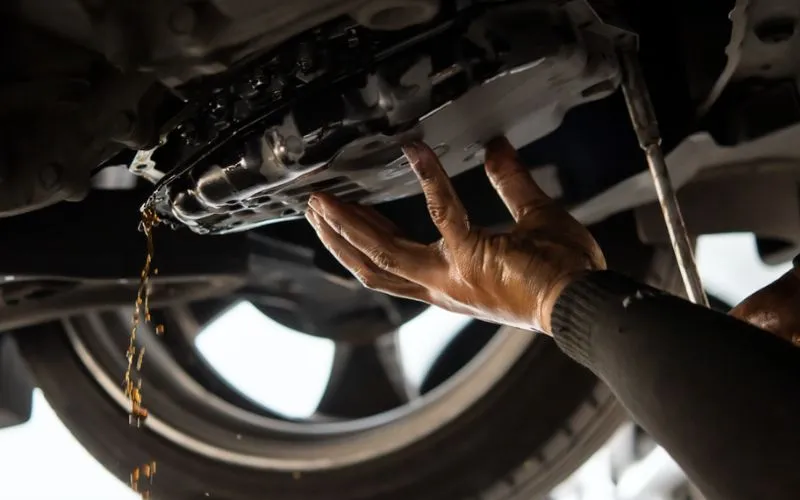
Oil pan gasket. The oil pan sits at the bottom of the engine. The gasket between the pan and the block can fail from age, heat, or impact damage from road debris. Oil pan gasket replacement on BMWs is more labor-intensive than on many cars because of subframe and crossmember access issues.
VANOS solenoid seals. The VANOS system controls variable valve timing on BMW engines. The solenoid seals, particularly on N52 and N54 engines, are small O-rings that harden and leak. Replacement is relatively simple compared to the other gaskets on this list, but the leaks can be tricky to pinpoint because of their location.
Rear main seal (crankshaft seal). Found where the crankshaft exits the engine into the transmission. This seal is the most labor-intensive to replace because the transmission must come out. Rear main seal leaks are more common on higher-mileage BMWs, typically over 100,000 miles.
Timing cover gasket. Less common, but when it leaks, it’s messy. The timing cover sits at the front of the engine and houses the timing chain. This repair overlaps with timing chain service in many cases.
This is the question every BMW owner eventually asks. It’s not a flaw, exactly. It’s a design trade-off.
BMW engineers prioritize performance, efficiency, and emissions control. That means higher operating temperatures, tighter engine bay packaging, and lightweight materials. All three factors accelerate gasket wear.
Higher engine operating temps mean gaskets experience greater thermal stress on every drive cycle. BMW’s use of composite and rubber gasket materials (rather than the metal gaskets found in some engines) means those seals degrade faster under heat.
Tight engine bay packaging is another factor. BMW engines are packed closely with turbochargers, intercoolers, and emissions equipment. Less airflow around the engine means heat soaks into components that would stay cooler in a more open layout.
Then there’s the Southern California factor. Our clients drive in conditions that compound the problem. Summer heat pushes underhood temps higher. Stop-and-go traffic on PCH and the 405 keeps the engine running hot without the cooling benefit of highway airflow. The result: gaskets that might last 120,000 miles in Minnesota fail at 70,000 here.
None of this means BMWs are unreliable. It means they need proactive maintenance from someone who understands where these engines are vulnerable and what to watch for at each mileage milestone.
A small oil leak doesn’t stay small. Oil leaks are progressive. The same heat that caused the gasket to fail in the first place keeps degrading it further, and the leak accelerates.
Oil on belts and hoses. A leaking oil filter housing gasket drips oil onto the serpentine belt and surrounding rubber hoses. Oil degrades rubber. The belt slips, squeals, or breaks. Coolant hoses soften and fail. What started as a gasket replacement becomes a belt, hose, and gasket job.
Engine bearing damage from low oil. Every quart of oil that leaks out is a quart that isn’t lubricating the engine. Run low enough, and the bearings, camshafts, and cylinder walls suffer permanent damage. Engine oil doesn’t just lubricate. It cools internal components and carries debris to the filter.
Fire hazard. Oil dripping on the exhaust manifold is a genuine fire risk. Most don’t ignite. But the ones that do produce engine bay fires that total vehicles. It’s not a theoretical risk. It happens.
Secondary damage to wiring and sensors. Oil soaks into wire harness connectors and sensor plugs. Over time, it swells insulation, corrodes contacts, and causes electrical gremlins that are expensive to diagnose and repair.
The cost multiplier. A valve cover gasket replacement on an N52 is a moderate repair. Add a belt, a hose, a sensor, and a tow because the belt broke on the freeway, and you’ve tripled the bill. Early repair is always cheaper than deferred repair.
Shawn Baker, our ASE Master Technician, has worked on over 20,000 vehicles across a 20-year career. He’s seen every variation of BMW oil leak, on every N-series and B-series engine BMW has put in a car. Here’s the process.
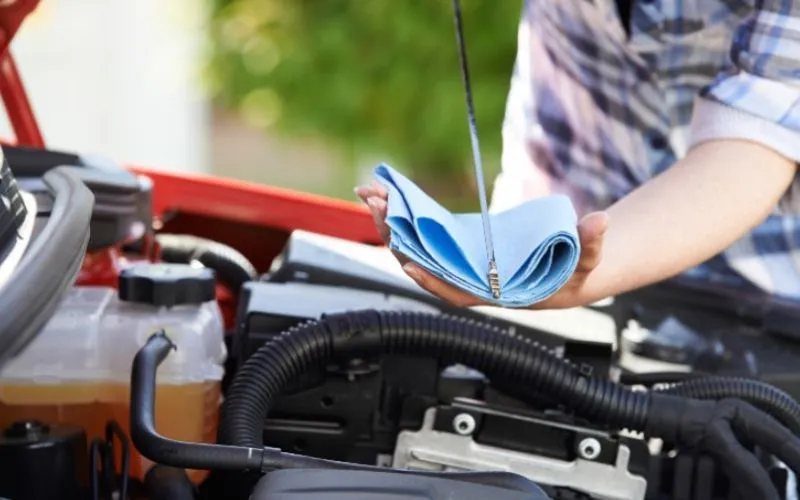
Step 1: Listen and inspect. We start with your description of the symptoms. When did you first notice the oil spots? Has the smell changed? Any warning lights? Then we do a thorough visual inspection with the engine cold and clean.
Step 2: Engine degrease. If oil has migrated across the engine (and it usually has), we degrease the exterior to create a clean baseline. This is critical. Without it, you can’t tell where the leak originates versus where oil has traveled.
Step 3: Dealer-level diagnostic scan. We run a full diagnostic scan using the same scan tools BMW dealerships use. This checks for PCV system faults, oil pressure irregularities, and any related fault codes that point to the leak’s root cause.
Step 4: UV dye test (if needed). For leaks that aren’t immediately visible after degreasing, we add UV-reactive dye to the engine oil. After a short drive cycle, the dye glows under UV light and traces the exact leak path. This eliminates guesswork.
Step 5: Detailed estimate with photos. We send you photos and a clear explanation of what’s leaking, why, and what it takes to fix it. No pressure. No upselling. Over 50 of our Google reviews specifically mention our honesty and transparency, and that’s by design. We tell you what’s needed and what can wait.
Step 6: Gasket replacement with proper specs. We use OEM-quality gaskets and follow BMW torque specifications. On valve cover jobs, that includes replacing the bolt grommets, cleaning sealing surfaces, and verifying the PCV system is functioning. Cutting corners on gasket work leads to repeat leaks, so we don’t cut them.
Step 7: Quality check and verification. After the repair, we run the engine, check for leaks, road test, and recheck. You get the car back with a clean engine bay and the confidence that the job is done.
Cost varies based on which gasket or seal is leaking, which engine you have, and how much disassembly is required to access the repair.
A valve cover gasket on an N52 inline-six requires less labor than the same job on an N63 V8, where each bank has its own valve cover buried under turbo plumbing. An oil pan gasket on a 3 Series with a standard subframe is less involved than one on an X5 with a transfer case in the way.
What we can tell you: independent shop pricing is significantly lower than BMW dealership rates for the same quality work. We use the same diagnostic tools, follow the same procedures, and install the same quality parts. You just don’t pay the dealership markup on labor.
We provide a written estimate before any work begins. If we find additional issues during the repair (a cracked PCV hose behind the valve cover, for example), we call you first. Always. No surprises on the invoice.
Affirm financing is available for larger repairs, so the cost doesn’t have to hit all at once.
Luxury Motors of South Bay is located at 505 Pacific Coast Hwy, Hermosa Beach, CA 90254. We serve BMW owners throughout Torrance, Redondo Beach, Manhattan Beach, Hermosa Beach, Palos Verdes, Long Beach, San Pedro, and West Los Angeles. Bilingual service available in English and Spanish.
With 240 five-star Google reviews and a reputation built on honest work, we’re the BMW specialist South Bay trusts for oil leak repair and everything in between.
240 five-star Google reviews. 20,000+ vehicles serviced. Zero negative reviews.
Porsche quoted me $5,000 for a brake job. I called Shawn, and over the phone, he gave me a price that was a fraction of that.
I recently brought my 2004 Porsche 911 Turbo… What I appreciated most was their honesty; they provided a 25-point inspection… It is rare to find a shop that treats both the customer and the car with this much respect.
I have a Porsche 911 and I am very selective on who I have work on my car. Expert level knowledge on luxury cars.
The dealership claimed it was just a battery issue. When the problem persisted, I turned to Luxury Motors of South Bay and they quickly identified and resolved the actual issue with precision.
These dudes know what they’re doing. I took my Audi in and they treated it like it was their own. Straightforward, honest…
Luxury Motors of South Bay serves the South Bay from our shop at 505 Pacific Coast Hwy, Hermosa Beach, CA 90254.
Bring your vehicle in for a no-pressure inspection. Shawn Baker, ASE Certified Master Technician with over 20 years of experience, leads every diagnosis. You’ll get photos, honest findings, and a clear estimate. No surprises, no upselling.
240 five-star Google reviews from real South Bay drivers. That’s not a tagline. It’s a track record.