

P
Paola C.
Google Review
★★★★★
Porsche quoted me $5,000 for a brake job. I called Shawn, and over the phone, he gave me a price that was a fraction of that.
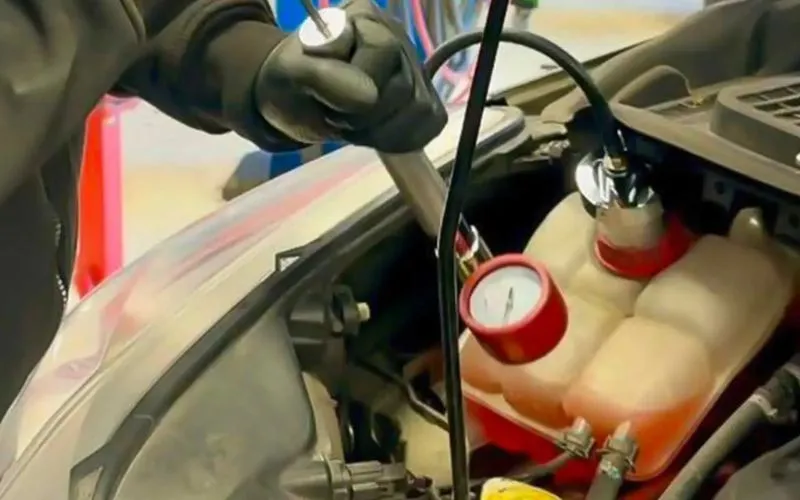
A temperature gauge creeping into the red, a puddle of colored fluid under your car, or steam rolling out from under the hood. These are signs of cooling system failure, and on a German engine they can go from minor problem to catastrophic damage fast. If your BMW, Porsche, or Mercedes is showing any of these symptoms in Hermosa Beach, a cooling system repair now can prevent engine overheating, avoid a costly engine overhaul, and keep your vehicle running the way it should.
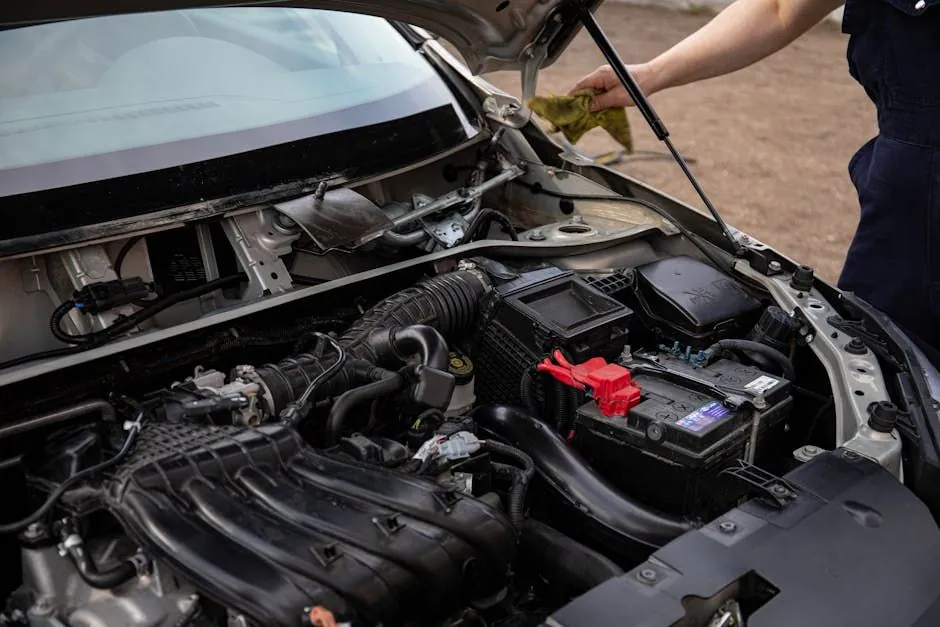
The six most common warning signs are a high temperature gauge reading, coolant leak under the car, low coolant level warnings, steam or smoke from the engine bay, a sweet smell near the engine, and the coolant warning light on your dashboard.
Any one of these is worth investigating. Two or more together usually means something has already failed and is getting worse.
German cars are especially sensitive to cooling system problems because their engines run at higher operating temperatures than most vehicles. The margin between “running normally” and “overheating” is narrower, which means the warning signs escalate faster.
On most German cars, the engine temperature gauge sits just below the midpoint during normal driving. That’s your baseline. If you notice it creeping above that center mark, something in the cooling system isn’t doing its job.
There’s a difference between slightly elevated and dangerously high.
Slightly above normal: The gauge reads a bit higher than usual, maybe a quarter past center. This often happens in heavy traffic on hot days when airflow through the radiator drops. Watch it. If it comes back down once you’re moving, you may not have a problem yet. But it’s worth having the system checked at your next service.
Well above normal or in the red: Pull over. Safely. Turn the engine off. This means the cooling system has lost its ability to regulate temperature. Continuing to drive risks warping the cylinder head, blowing a head gasket, or cracking the engine block. We’re talking $3,000-$10,000 in engine damage from what might be a $200-$500 cooling system repair.
Modern BMWs and Mercedes often use digital temperature readouts or warning messages instead of traditional gauges. Some models don’t even show you the temperature unless there’s a problem. If you get any overheating warning message, treat it seriously. The car’s computer waits until things are genuinely wrong before alerting you.
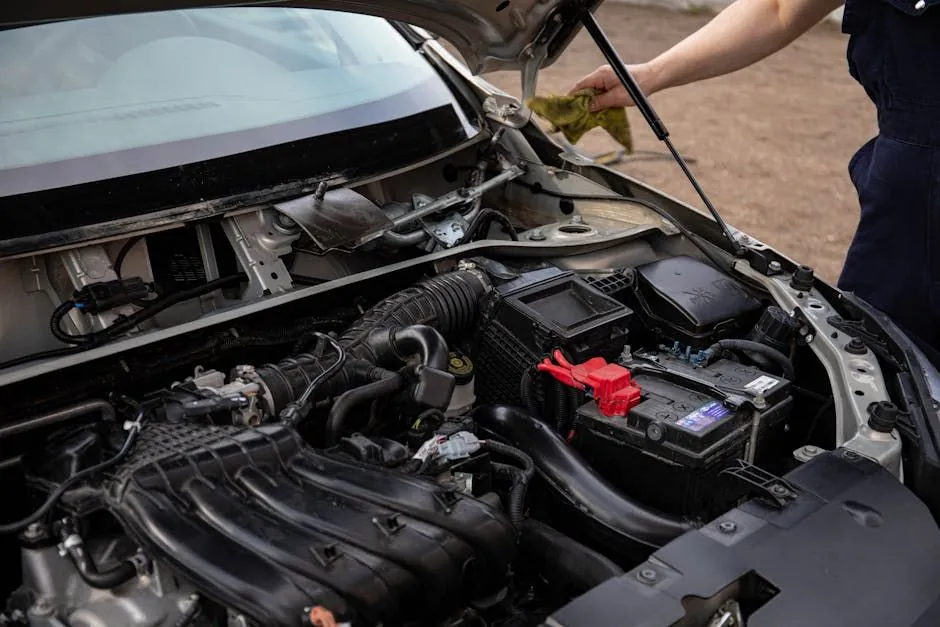
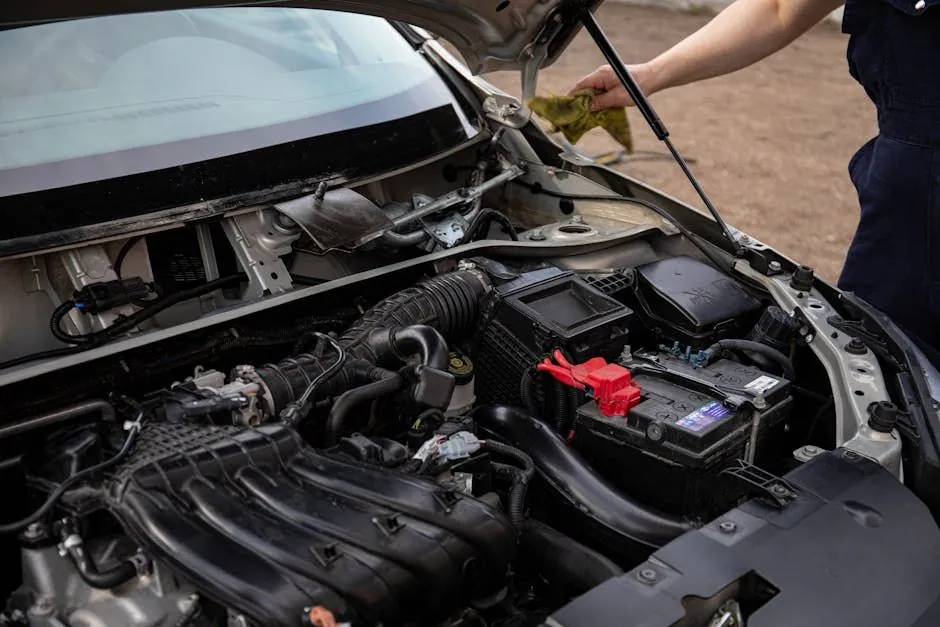
Coolant isn’t one color. It depends on the type your car uses.
Blue or blue-green: This is what most modern BMWs use. If you see a blue-tinted puddle, that’s almost certainly coolant.
Pink or reddish-pink: Common in Mercedes and some Porsche models. Don’t confuse this with transmission fluid, which is also reddish. Coolant has a thinner consistency and a sweet smell. Transmission fluid feels oilier.
Green: The traditional coolant color. Some older German cars or aftermarket-filled vehicles may have green coolant.
Orange: Long-life coolant used in some applications. Less common on German cars but not unheard of.
The telltale sign beyond color is the smell. Antifreeze has a distinctly sweet, almost syrupy smell. If you notice that scent near your engine or in the cabin through the vents, coolant is leaking somewhere and likely hitting a hot surface.
Where to look: check the ground directly under the front of your car, particularly under the radiator area. Also look near each wheel (caliper area) since heater hoses run through the cabin. And check under the engine itself for drips on the undertray.
No. A coolant leak means the cooling system is losing the fluid it needs to regulate engine temperature. Once the level drops far enough, the engine overheats. And overheating a German engine, even once, can cause permanent damage.
Here’s the progression:
A small leak lets coolant drip slowly. The level drops over days or weeks. The engine temperature rises slightly. You might not notice because the increase is gradual. Then one hot day in traffic, the system doesn’t have enough coolant to keep up. The temperature spikes. In minutes, you’re looking at serious engine damage.
The cost comparison makes the decision obvious. A leaking hose or cracked expansion tank is a $200-$600 repair on most German cars. A warped cylinder head from overheating is $2,000-$4,000. A cracked engine block can total the car.
If you see any sign of a coolant leak, get it diagnosed. If the leak is active (you can see fluid dripping), don’t drive across town to your preferred shop. Go to the nearest qualified mechanic.
Most cooling system failures come down to one of five components:
Thermostat failure. The thermostat controls coolant flow between the engine and radiator. When it fails stuck-closed, coolant can’t reach the radiator to cool down. The engine overheats quickly. When it fails stuck-open, the engine runs too cool, which causes its own set of problems including poor fuel economy and increased emissions. On German cars, thermostat replacement is one of the most common cooling system repairs.
Water pump failure. The water pump circulates coolant through the entire system. When it fails, coolant stops moving and the engine overheats even though the system is full. Many modern BMWs use electric water pumps, which can fail without the typical warning signs (like a squealing belt) that mechanical pumps give you.
Radiator damage. Cracks, corrosion, or internal blockage reduce the radiator’s ability to shed heat. Road debris can damage the radiator core. Internal blockage happens when old, degraded coolant leaves deposits inside the radiator passages.
Deteriorating hoses. Rubber coolant hoses break down over time. They crack, swell, and eventually leak or burst. The outside might look fine while the inside is deteriorating. German car cooling hoses should be inspected every few years, especially after 60,000 miles.
Low coolant from neglected maintenance. Sometimes there’s no dramatic failure. The coolant level just gradually drops because nobody checked it, and the system can’t keep up on a hot day.
German cars have some well-known weak points in their cooling systems.
BMW is notorious for plastic expansion tanks that crack. The tank sits in a hot engine bay, and over years the plastic becomes brittle. When it cracks, coolant dumps out and the engine overheats. This happens on almost every BMW model eventually, particularly the 3 Series and X3/X5.
BMW electric water pumps are another common failure point. They’re quieter and more efficient than mechanical pumps, but they have a lifespan. Most fail between 60,000-100,000 miles. The good news: they often give you a warning code before they fail completely.
Thermostat housings on both BMW and Porsche are often made of plastic (yes, plastic next to a hot engine). They crack and leak. Replacing the thermostat and housing together is standard practice because the housing is usually the part that actually fails.
Porsche Cayenne and Macan models share some cooling components with Audi SUVs, including coolant pipes that run under the intake manifold. When these leak, the coolant drips onto the engine and can be hard to spot until the level gets critically low.
These aren’t design flaws exactly. They’re known maintenance items. If you own a German car past 60,000 miles, these components should be on your radar.
Most German manufacturers recommend a coolant flush every 2-3 years or 30,000 miles, whichever comes first. Some newer models stretch this to 4-5 years with long-life coolant formulations.
Old coolant causes problems beyond just losing its cooling ability. As coolant ages, its pH changes. It becomes acidic, which corrodes the aluminum and plastic components in your cooling system from the inside. That corrosion is what causes many of the leaks and failures we see on higher-mileage German cars.
A coolant flush replaces the old fluid with fresh antifreeze, restores the correct pH balance, and clears out any deposits or sediment that built up in the system. It’s one of the cheapest forms of preventative maintenance and it directly protects the most expensive components.
At Luxury Motors of South Bay, we check coolant condition during every service. We test the pH and freeze protection to make sure the fluid is still doing its job. When it’s time for a flush, we use the correct manufacturer-specified coolant for your vehicle, not universal green stuff from the parts store.
Temperature gauge climbing? Puddle under your car? Call Luxury Motors of South Bay at 310-504-0089 or visit us at 505 Pacific Coast Hwy, Hermosa Beach, CA 90254. We’ll diagnose the problem and tell you exactly what needs to happen before it gets expensive.
240 five-star Google reviews. 20,000+ vehicles serviced. Zero negative reviews.
Porsche quoted me $5,000 for a brake job. I called Shawn, and over the phone, he gave me a price that was a fraction of that.
I recently brought my 2004 Porsche 911 Turbo… What I appreciated most was their honesty; they provided a 25-point inspection… It is rare to find a shop that treats both the customer and the car with this much respect.
I have a Porsche 911 and I am very selective on who I have work on my car. Expert level knowledge on luxury cars.
The dealership claimed it was just a battery issue. When the problem persisted, I turned to Luxury Motors of South Bay and they quickly identified and resolved the actual issue with precision.
These dudes know what they’re doing. I took my Audi in and they treated it like it was their own. Straightforward, honest…
Luxury Motors of South Bay serves the South Bay from our shop at 505 Pacific Coast Hwy, Hermosa Beach, CA 90254.
Bring your vehicle in for a no-pressure inspection. Shawn Baker, ASE Certified Master Technician with over 20 years of experience, leads every diagnosis. You’ll get photos, honest findings, and a clear estimate. No surprises, no upselling.
240 five-star Google reviews from real South Bay drivers. That’s not a tagline. It’s a track record.