

01
Squeaking or squealing
Squeaking or squealing at low speeds, especially when brakes are cold
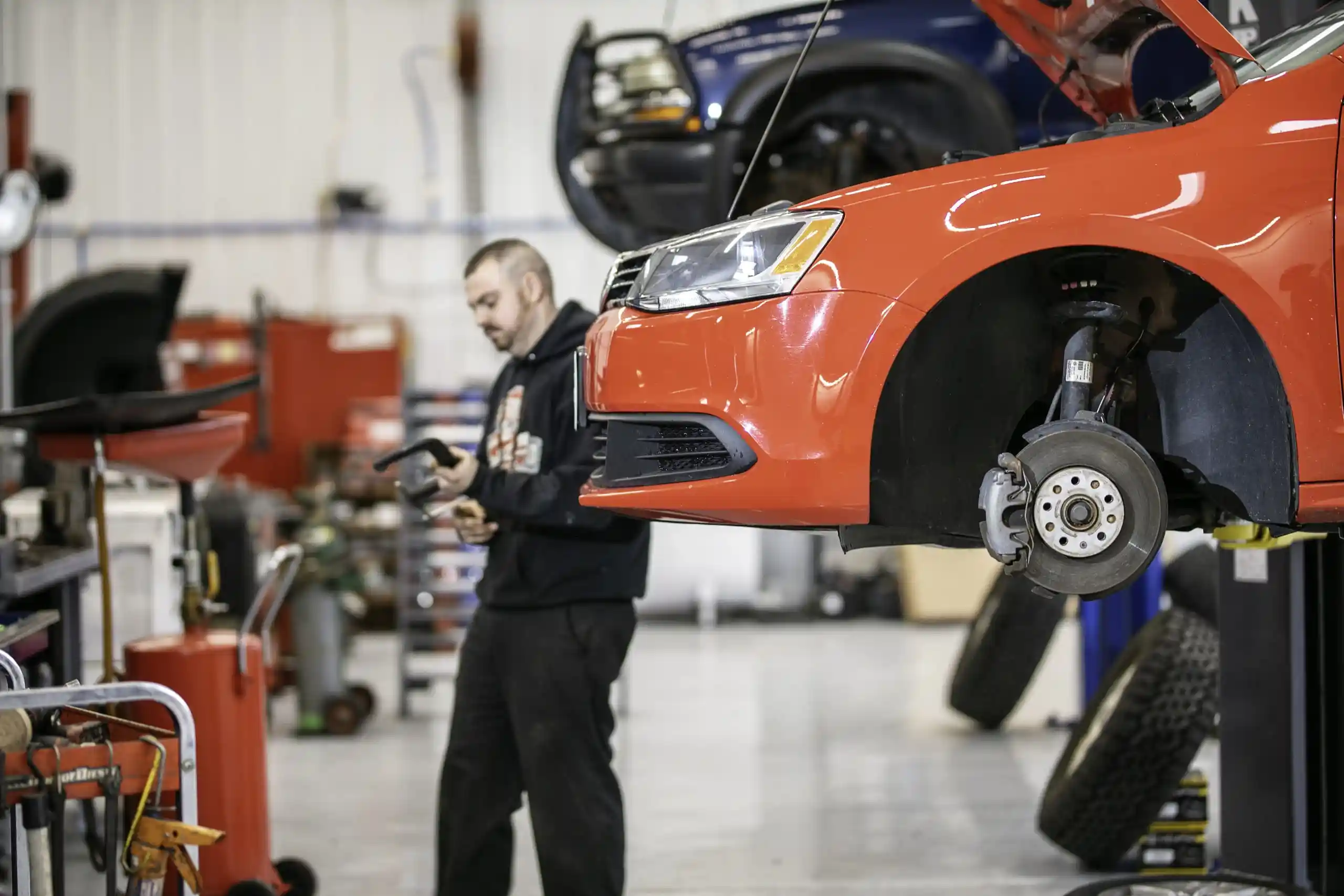
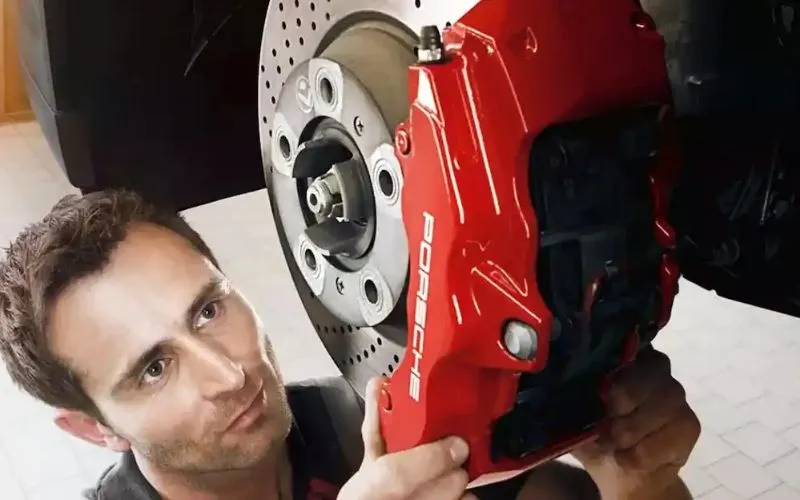
Squeaking brakes, grinding sounds, vibration through the pedal, or a brake warning light on your Porsche mean your stopping system needs professional attention. Luxury Motors of South Bay in Hermosa Beach, CA provides Porsche brake pad replacement, cross-drilled rotor service, brake fluid flush, and caliper repair that restores full braking power and driving confidence. From the 911’s rear-biased weight distribution to the Cayenne’s heavy-duty brake demands and the Macan’s sport-tuned system, we service every Porsche model with the precision these cars require.
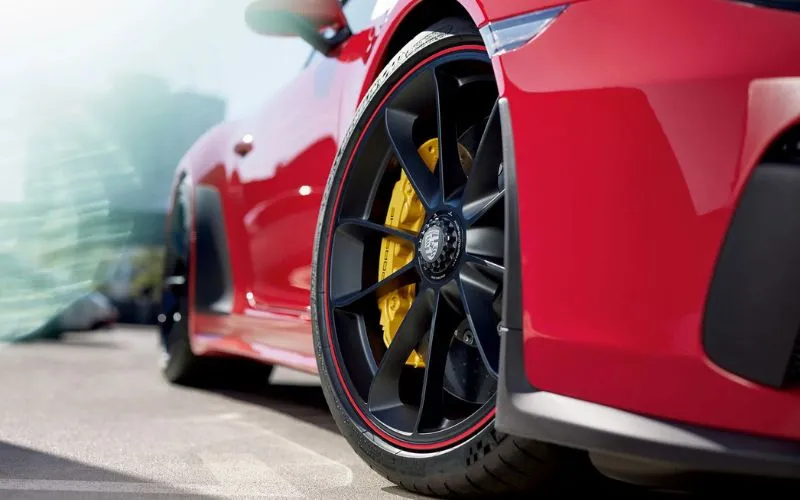
Porsche brake pad and rotor replacement at a qualified independent shop can save you hundreds to thousands of dollars compared to Porsche dealership pricing. We provide a detailed, line-by-line estimate before starting any work.
One of our customers, Paola C., put it simply: “Porsche quoted me $5,000 for a brake job. I called Shawn, and over the phone, he gave me a price that was a fraction of that.”
Your final cost depends on the model, whether you have standard iron rotors or PCCB ceramic brakes, and which components need replacement. A 911 rear brake job costs differently than a Cayenne front brake job because the parts, pad compounds, and labor access are different. We break all of this down before you approve anything.
No surprise charges. No inflated parts markup. Just honest numbers from a shop with 240 five-star reviews and a reputation for treating Porsche owners fairly.
Porsche brake systems are built for high performance, but they still wear down. Knowing what to listen and feel for can save you money by catching problems before they escalate.
Squeaking or squealing at low speeds, especially when brakes are cold
Grinding or scraping sounds that indicate pad material is gone and metal is contacting the rotor
Vibration or pulsation through the brake pedal or steering wheel during braking
Soft or spongy pedal feel where you have to push further than normal to slow down
Brake warning light on the instrument cluster
Longer stopping distances even when pressing the pedal firmly
Excessive brake dust on front wheels, or a sudden change in dust levels
Pulling to one side when you brake, which can mean a sticking caliper or uneven pad wear
Porsche models with electronic brake wear sensors will trigger a dash notification when pads reach minimum thickness. But sensors are just one data point. We recommend a visual brake inspection every 10,000 to 15,000 miles, or sooner if you notice any of these symptoms.
Porsche brake systems are engineered differently than other German cars, and those differences matter when it’s time for service.
The 911’s rear-engine layout changes everything. With the engine behind the rear axle, the 911 puts more weight over the back wheels than a conventional car. This shifts the brake bias and means the rear brakes do more work than you’d expect. A technician who doesn’t account for this can install the wrong pad compound or miss rear rotor wear that a 911 specialist would catch immediately.
Cross-drilled rotors need careful handling. Porsche has used cross-drilled rotors across its lineup for decades. These holes improve heat dissipation and wet-weather performance, but they also create stress points. Over-torquing lug bolts or using impact tools incorrectly on drilled rotors can cause cracking. We follow Porsche’s torque specifications exactly.
Brake sensor systems require proper coding. After pad replacement, the electronic wear sensor must be replaced and the system reset through a dealer-level scan tool. Skip this step and your brake service indicator won’t work correctly until the next scheduled service.
Performance pad selection is model-specific. A Cayenne S towing a boat trailer needs a different pad compound than a 911 GT3 doing track days. Getting this wrong affects stopping power, noise, dust production, and rotor wear rates.
Our ASE Certified Master Technician, Shawn Baker, has serviced Porsche brake systems for over two decades. He uses dealer-level diagnostic equipment for sensor coding, ABS system communication, and system-level testing that generic scan tools simply can’t access.
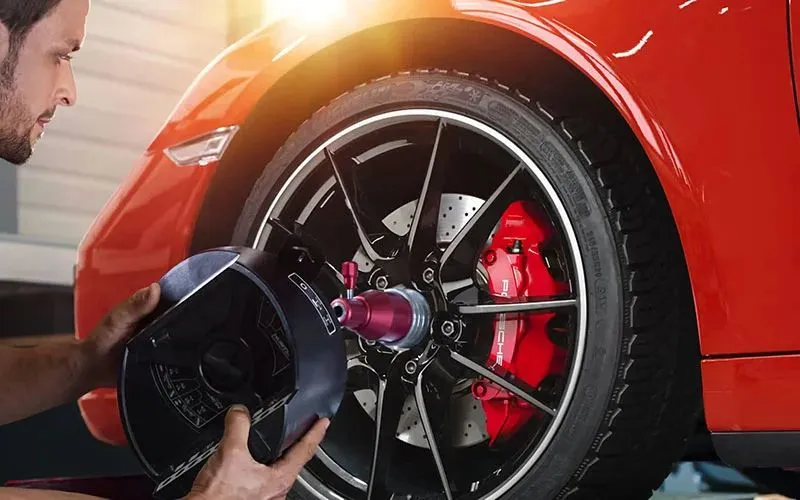
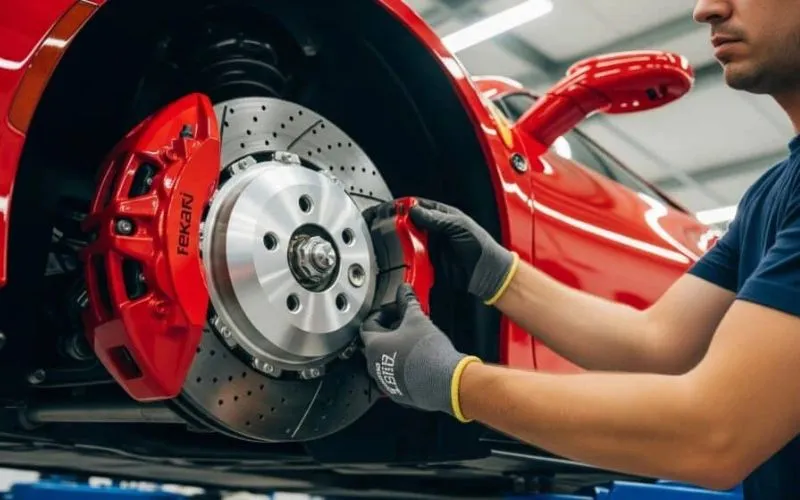
Porsche offers two fundamentally different brake systems, and they require completely different service approaches.
Standard iron rotors are what most Porsche models come equipped with from the factory. These are conventional cast-iron discs, often cross-drilled, paired with semi-metallic or ceramic pad compounds. They’re serviceable at any qualified shop, and replacement parts are widely available. Iron rotors wear gradually and need replacement when they reach minimum thickness, typically between 50,000 and 80,000 miles depending on driving style.
PCCB (Porsche Ceramic Composite Brakes) are the optional upgrade available on 911, Cayenne, Panamera, and other models. These rotors are made from a silicon carbide ceramic material that’s lighter, more heat-resistant, and longer-lasting than iron. They’re identified by yellow brake calipers from the factory.
PCCB rotors can last well over 100,000 miles under normal street driving. But when they do need replacement, costs are substantially higher than standard rotors. The ceramic material also requires specific pad compounds designed for the surface. Using standard pads on PCCB rotors will damage the ceramic surface and create poor stopping performance.
If you have PCCB brakes, it’s worth having a shop that understands the system inspect them properly. We’ll tell you honestly whether your ceramic rotors still have life in them or whether it’s time to budget for replacement.
Every Porsche model has its own brake personality. Here’s how we approach service for the models we see most often.
911 (991, 992, and earlier): Rear brake bias means we pay extra attention to the back. We check rear rotor thickness and pad wear carefully, since many owners are surprised to learn their 911’s rear brakes wear faster than the fronts. Pad compound selection depends on whether you’re a daily driver or you take the car to the track occasionally.
Cayenne: The heaviest Porsche in the lineup, and the brakes work hard for it. Towing, freeway merging, and canyon driving all stress the Cayenne’s brake system. We see Cayenne owners more frequently for brake service than any other model. Rotor replacement is common around 50,000 to 60,000 miles.
Macan: Sport-tuned brakes that handle daily driving and spirited weekend runs. Pad wear is moderate, but the sport suspension means the brakes see more aggressive use than the average SUV.
Panamera, Boxster, and Cayman: Each has unique caliper sizing and pad specifications. We carry or source the correct parts for every variant.
For every brake service, we flush and replace brake fluid using Porsche-specification DOT 4. Old fluid absorbs moisture over time, lowering its boiling point and creating the conditions for brake fade during hard stops. A fluid flush is part of doing the job right.
As Dr. Jake B. shared in his review: “I have a Porsche 911 and I am very selective on who I have work on my car. Expert level knowledge on luxury cars.”
This is a fair question, and we’ll give you a straight answer.
OEM parts are manufactured to Porsche’s exact specifications. They’re the same components that come on the car from the factory. If you want to keep everything factory-original, OEM is the way to go. The tradeoff is higher cost.
Quality aftermarket parts from manufacturers like Brembo, ATE, or Textar meet or exceed Porsche’s friction, heat, and wear specifications. These are the same companies that often supply OEM parts to Porsche in the first place, just without the Porsche packaging and markup.
We don’t use budget-grade parts on any vehicle. Every pad, rotor, and sensor we install meets the performance standard your Porsche was designed for. We’ll explain the options, show you the price difference, and let you decide what makes sense for your situation.
All brake work comes with a warranty on both parts and labor.
240 five-star Google reviews. 20,000+ vehicles serviced. Zero negative reviews.
Porsche quoted me $5,000 for a brake job. I called Shawn, and over the phone, he gave me a price that was a fraction of that.
I recently brought my 2004 Porsche 911 Turbo… What I appreciated most was their honesty; they provided a 25-point inspection… It is rare to find a shop that treats both the customer and the car with this much respect.
I have a Porsche 911 and I am very selective on who I have work on my car. Expert level knowledge on luxury cars.
The dealership claimed it was just a battery issue. When the problem persisted, I turned to Luxury Motors of South Bay and they quickly identified and resolved the actual issue with precision.
These dudes know what they’re doing. I took my Audi in and they treated it like it was their own. Straightforward, honest…
Luxury Motors of South Bay serves Porsche owners throughout the South Bay from our shop at 505 Pacific Coast Hwy, Hermosa Beach, CA 90254. We’re close to Redondo Beach, Manhattan Beach, Palos Verdes, Long Beach, San Pedro, and West Los Angeles. Need a ride home while we work on your Porsche? We offer concierge pickup and drop-off because that’s the kind of experience Porsche owners deserve.
Bring your vehicle in for a no-pressure inspection. Shawn Baker, ASE Certified Master Technician with over 20 years of experience, leads every diagnosis. You’ll get photos, honest findings, and a clear estimate. No surprises, no upselling.
240 five-star Google reviews from real South Bay drivers. That’s not a tagline. It’s a track record.