

01
Braking system inspection
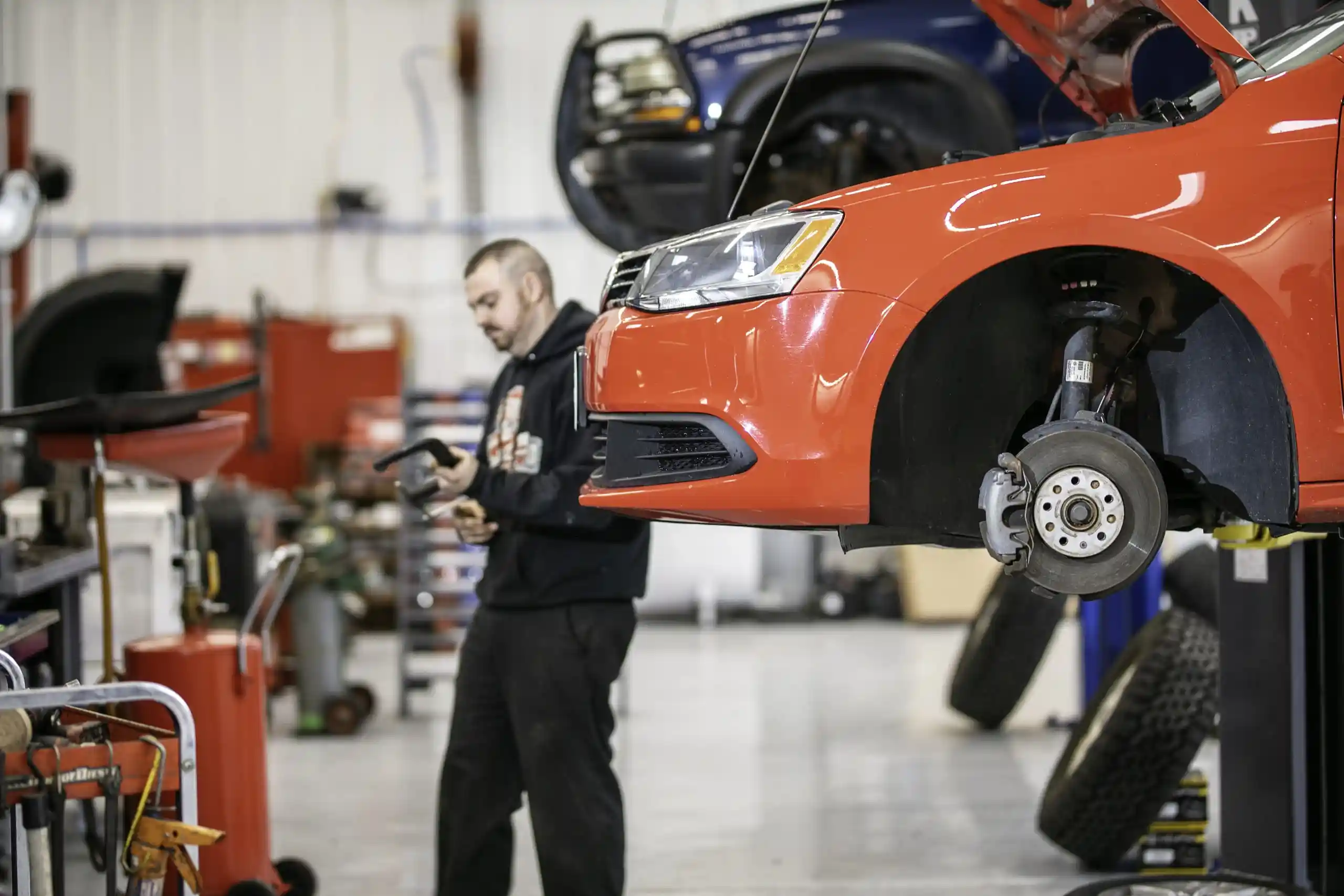
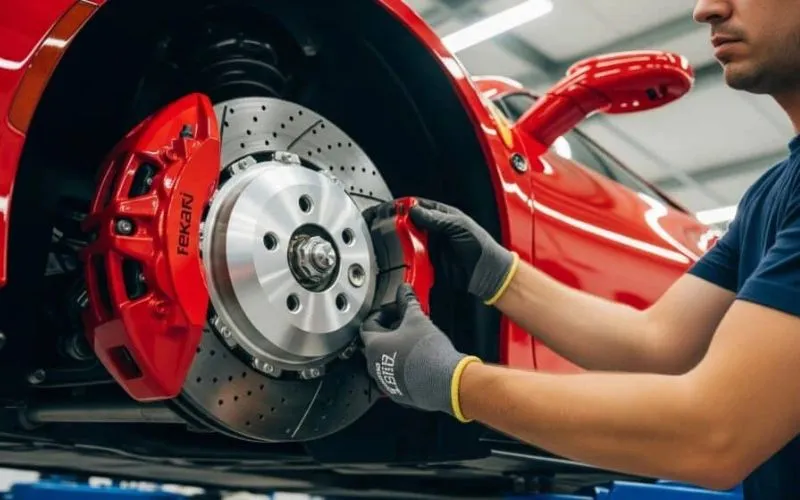
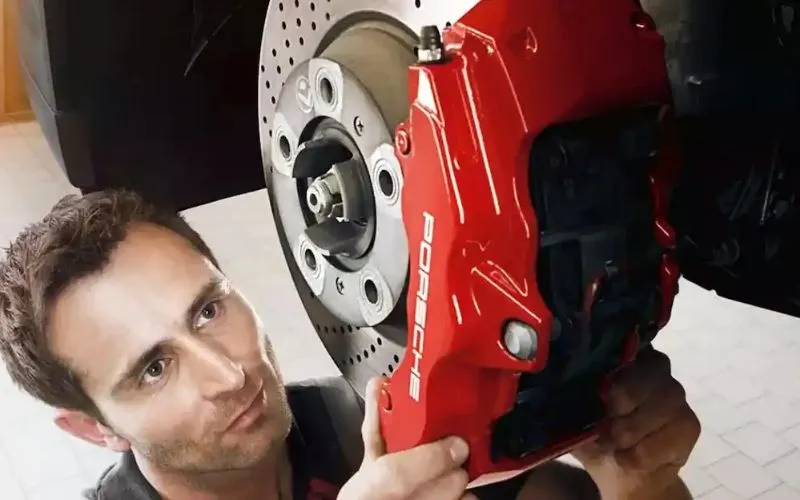
Braking system inspection. We measure every pad and rotor, inspect calipers for leaks and binding, and check brake lines for wear.
Squealing brakes, a grinding noise when stopping, or a BMW brake warning light on your dashboard all mean the same thing: your braking system needs attention now. BMW brake pad replacement and rotor replacement in Hermosa Beach doesn’t have to cost what the dealer quotes, and it shouldn’t compromise safe stopping performance. Getting your calipers inspected, brake fluid checked, and brake wear sensors replaced with OEM-quality parts at a fair price is exactly what an independent BMW specialist does better than the dealership.
BMW brake pad replacement typically costs $300 to $600 per axle. Pads and rotors together run $600 to $1,200 per axle. Full brake service including calipers adds $1,000 to $1,800 per axle.
Here’s a quick cost breakdown:
| Service | Independent Shop | BMW Dealer |
|---------|-----------------|------------|
| Brake pads only (per axle) | $300 - $600 | $500 - $900 |
| Pads + rotors (per axle) | $600 - $1,200 | $1,000 - $1,800 |
| Pads + rotors + calipers (per axle) | $1,000 - $1,800 | $1,500 - $2,800 |
| Brake fluid flush | $100 - $150 | $200 - $300 |
These ranges cover most BMW models from the 3 Series through the X5. M models and performance packages cost more because the brake components are larger and more expensive. We’ll break down what affects the price below.
The biggest variable isn’t the parts. It’s where you take it.
Several factors determine whether your brake job falls at the low end or the high end of those ranges.
Model and trim level. A brake job on a 320i costs less than one on an X5 M50i. Larger, heavier vehicles use bigger rotors and thicker pads. Performance trims like M Sport come with upgraded braking systems that use more expensive components.
Front vs rear. Front brakes do roughly 70% of the stopping work, so they wear faster and cost more to replace. Front rotors are larger, and front calipers are beefier. If your fronts are worn but your rears still have life, there’s no reason to replace all four at once.
OEM vs aftermarket parts. OEM BMW brake pads from a dealer parts counter cost $80 to $150 per axle. Quality aftermarket pads from brands like Akebono, StopTech, or EBC run $40 to $90. The performance difference depends on the specific brand and compound, which we’ll cover below.
Rotor condition. Sometimes the rotors can be reused if they’re above minimum thickness and not warped. That saves $200 to $400 per axle. But if the pads have worn down to metal-on-metal, the rotors are almost certainly scored and need replacing too.
Brake wear sensor. BMWs use electronic brake wear sensors that trigger the dashboard warning. These get replaced with every brake pad change. They’re $15 to $30 per sensor, but they’re a line item some shops forget to mention.
Labor rate. This is where the dealer-vs-independent gap is widest. BMW dealer labor rates in the South Bay area run $200 to $280 per hour. Independent specialist rates are typically $150 to $200 per hour for the same quality of work.
The dealer isn’t charging more because they do better work. They’re charging more because their overhead is higher.
BMW dealerships carry enormous facility costs, franchise fees, and staffing requirements that independent shops don’t have. Those costs get passed to you through higher labor rates and marked-up parts. A brake pad that costs the dealer $85 from BMW gets sold to you at $150 to $180 with dealer markup.
An independent BMW specialist buys the same OEM parts from the same suppliers, often at better pricing because they’re not locked into a single parts source. The labor is performed by technicians with the same certifications, using the same diagnostic tools. The difference is the overhead, not the quality.
One concern some BMW owners have: “Will going to an independent shop void my warranty?” No. The Magnuson-Moss Warranty Act protects your right to service your vehicle at any qualified shop. As long as the work is performed to BMW specifications with appropriate parts, your warranty remains intact.
At Luxury Motors of South Bay, we use dealer-level BMW diagnostic tools to reset the Condition Based Service (CBS) system after every brake job. Your car’s computer knows the brakes were serviced, and the service interval resets correctly. Some independent shops skip this step because they don’t have the tools. We don’t skip it.
BMW brake pads typically last 30,000 to 50,000 miles. Rotors last 50,000 to 70,000 miles. Your actual mileage depends on how and where you drive.
City driving wears brakes faster than highway driving. Stop-and-go traffic in the South Bay means more brake applications per mile than cruising on the 405. Aggressive driving habits, like braking late and hard, accelerate wear significantly.
BMW’s M Sport and performance packages come with larger, more aggressive brake setups. These provide better stopping power, but the performance-compound pads tend to wear faster. An M340i owner might see brake pads at 25,000 miles, while a standard 330i goes 45,000.
BMW includes an electronic brake wear sensor system on every model. When the pads reach a minimum thickness, the sensor triggers a dashboard warning well before the pads are completely gone. This gives you time to schedule service rather than dealing with an emergency. Don’t ignore this warning. The sensor is giving you a window. Once you hear grinding, that window has closed and the cost just went up because the rotors are now damaged too.
Your BMW will tell you when the brakes need attention. Here’s what to listen and feel for:
Brake warning light on the dashboard. The BMW CBS system monitors brake pad wear electronically. When the light comes on, you have some pad life remaining, but not much. Schedule service within the next 1,000 to 2,000 miles.
Squealing noise when braking. A high-pitched squeal usually means the pads are getting thin. Some BMW brake pads have a built-in metal tab that contacts the rotor when the pad wears down, creating this noise intentionally as a warning.
Grinding or scraping noise. This means the pads are gone and the metal backing plate is grinding directly against the rotor. Every mile you drive with grinding brakes is destroying the rotors and increasing the repair cost. This is the difference between a $600 brake job and a $1,200 one.
Pulsating brake pedal. A vibration or pulsation in the brake pedal during stopping usually indicates warped rotors. The rotor surface is no longer flat, so the pads make uneven contact.
Longer stopping distances. If your BMW takes noticeably longer to stop than it used to, the pads are worn, the brake fluid is old, or both. This is a safety issue, not a convenience issue.
Pulling to one side under braking. This can indicate a stuck caliper or uneven pad wear. One side is doing more braking work than the other.
Both are valid options. The right choice depends on the specific parts and your priorities.
OEM brake pads are manufactured to BMW’s exact specifications. They produce the same dust level, noise level, and wear characteristics as the pads that came on the car from the factory. If you want everything to feel exactly like it did when the car was new, OEM is the straightforward choice.
Quality aftermarket brake pads from reputable brands like Akebono, StopTech, Hawk, or EBC can match or exceed OEM performance at a lower price point. Akebono ceramic pads, for example, produce less dust than OEM BMW pads while delivering comparable stopping power. Many BMW owners prefer them for that reason alone, since BMW brake dust is notorious for coating wheels.
What to avoid: economy-grade aftermarket pads from unknown brands. These pads use inferior friction compounds that wear faster, stop worse, and can damage rotors. Saving $30 on pads that cost you $400 in premature rotor wear isn’t a bargain.
At Luxury Motors of South Bay, we discuss the options with you before ordering parts. We stock OEM and quality aftermarket from trusted brands, and we’ll explain the tradeoffs honestly so you can decide based on your driving habits and budget.
BMW brake service at Luxury Motors of South Bay goes beyond swapping pads. Here’s the full process:
Braking system inspection. We measure every pad and rotor, inspect calipers for leaks and binding, and check brake lines for wear.
Brake pad and/or rotor replacement. Using OEM or quality aftermarket parts, depending on your preference.
Brake wear sensor replacement. New sensors with every pad change so the BMW CBS system tracks wear accurately.
Caliper inspection and service. Checking for stuck slide pins, leaking seals, and proper operation. Calipers get cleaned and lubricated to prevent uneven wear.
Brake fluid check. Testing the fluid’s moisture content and boiling point. If the fluid is due for replacement, we’ll include it in the estimate.
Diagnostic scan and CBS reset. Using dealer-level BMW diagnostic tools to clear brake-related fault codes and reset the service interval in the car’s computer.
Photo documentation. Before and after photos showing pad thickness, rotor condition, and any other findings.
Shawn Baker, our ASE Certified Master Technician, has performed brake service on thousands of BMWs over his 20+ year career. He knows the common failure patterns on every generation, from E90 to G20, and can tell you exactly what your car needs without padding the estimate.
Ready to get your BMW brakes inspected? Schedule an appointment or call us at 310-504-0089. You can also learn more about our full brake repair services or our BMW specialist capabilities.
Luxury Motors of South Bay | 505 Pacific Coast Hwy, Hermosa Beach, CA 90254 | 310-504-0089
240 five-star Google reviews. 20,000+ vehicles serviced. Zero negative reviews.
Porsche quoted me $5,000 for a brake job. I called Shawn, and over the phone, he gave me a price that was a fraction of that.
I recently brought my 2004 Porsche 911 Turbo… What I appreciated most was their honesty; they provided a 25-point inspection… It is rare to find a shop that treats both the customer and the car with this much respect.
I have a Porsche 911 and I am very selective on who I have work on my car. Expert level knowledge on luxury cars.
The dealership claimed it was just a battery issue. When the problem persisted, I turned to Luxury Motors of South Bay and they quickly identified and resolved the actual issue with precision.
These dudes know what they’re doing. I took my Audi in and they treated it like it was their own. Straightforward, honest…
Luxury Motors of South Bay serves the South Bay from our shop at 505 Pacific Coast Hwy, Hermosa Beach, CA 90254.
Bring your vehicle in for a no-pressure inspection. Shawn Baker, ASE Certified Master Technician with over 20 years of experience, leads every diagnosis. You’ll get photos, honest findings, and a clear estimate. No surprises, no upselling.
240 five-star Google reviews from real South Bay drivers. That’s not a tagline. It’s a track record.