
Ownership and Maintenance
German Car Repair and Maintenance: Catch Problems Before They Get Expensive
I'm Shawn Baker, an ASE Certified Master Technician and the founder of Luxury Motors of South Bay in Hermosa Beach. Preventive maintenance is what keeps a German car dependable past 150,000 miles instead of stranding you with a surprise repair bill. This guide covers the real service intervals, oil specifications, and common failure points for BMW, Mercedes-Benz, Audi, Volkswagen, and Porsche. Most of the expensive German car repair we see started as a routine service someone put off a few thousand miles too long.
That's the whole idea behind good German and European auto repair: catch the small stuff on schedule so it never becomes the big stuff on the freeway shoulder.
What Preventive Maintenance Does a German Car Actually Need?
A German car needs regular oil changes on the manufacturer's schedule, cooling system checks, brake inspections, fluid services, battery testing, and milestone services at 30,000, 60,000, and 90,000 miles. Skip any of them long enough and the fix costs more than the maintenance would have.
Preventive care on a European car isn't the same as a quick lube visit. Each make sets its own intervals, its own oil specification, and its own known weak points. The work starts with the fundamentals in our routine maintenance for German cars, then adjusts for the specific model in your driveway.
Here's what a real program covers, whether you drive a Porsche or a Volkswagen:
- Oil and filter on the correct interval, with the exact oil your engine is certified for.
- Cooling system checks on the plastic parts that get brittle with heat and age.
- Brakes measured for pad thickness and rotor condition before they score.
- Transmission fluid on schedule, especially on dual-clutch and ZF automatics.
- Battery and electrical testing to catch voltage drops before they leave you stranded.
- Milestone services at 30K, 60K, and 90K that catch wear on a timeline.
How Often Should You Service a BMW, Mercedes, Audi, or Porsche?
Most German makes call for service every 10,000 miles or once a year, but the interval shifts with the model, the engine, and how you drive. Stop-and-go traffic on the 405 and PCH is harder on an engine than steady highway miles, so the manufacturer's number is a starting point, not a promise.
BMW uses Condition Based Service, which watches oil quality and brake wear through onboard sensors and usually flags a reminder between 10,000 and 15,000 miles. That system assumes easy driving, so hard local miles tend to move it up.
Mercedes-Benz alternates Service A and Service B roughly every 10,000 miles. Service A is the lighter visit (oil, filter, fluid check). Service B goes deeper, with a brake inspection, cabin filter, and a full system check.
Audi and Volkswagen generally recommend service around every 10,000 miles. Their turbocharged engines can use a little oil between changes, so checking the level monthly matters more than most owners expect.
Porsche intervals vary by model. A naturally aspirated 911 flat-six has different needs than a turbo four-cylinder Macan, and the flat-six benefits from more frequent oil service at higher mileage.
With more than 20 years of experience and 20,000-plus vehicles serviced, I often set shorter intervals for customers who spend most of their time in South Bay traffic.
Why European Oil and Filter Specs Are Not Optional
German engines are built to run a specific oil formulation, not whatever a quick lube shop pours in. The certification on the bottle tells you whether the oil can handle the heat, pressure, and long drain intervals these engines were designed around.
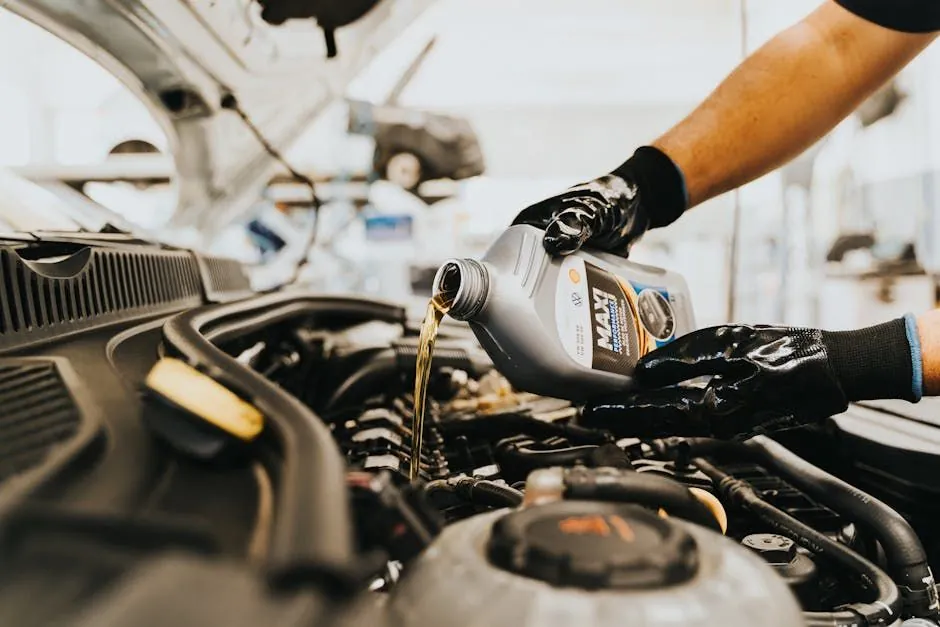
Fresh oil in the correct certified spec is the cheapest insurance a German engine gets. The wrong oil builds sludge quietly.
BMW requires LL-01 certified oil for long-life thermal stability and deposit control. Porsche specifies A40 for most of its lineup, with the exact grade tied to the engine. Mercedes-Benz calls for 229.5 across most models, and some AMG variants need a different spec. Audi and Volkswagen share the VW 502/505 specification that covers most of their turbocharged engines.
The filter matters as much as the oil. Many German engines route oil through a plastic filter housing that can leak with age, so a proper oil service includes checking that housing and the cap seal, not just swapping the cartridge.
We've opened up engines under 80,000 miles packed with sludge because a previous shop used conventional oil or a non-certified synthetic. The wrong oil doesn't fail on the drive home. It builds up quietly, restricts flow to the bearings and turbo, and turns a routine service into engine work.
Why the Cooling System Is Where German Cars Break First
On higher-mileage German cars, the cooling system is the repair we quote most often. BMW, Audi, and Porsche build these systems with plastic components (thermostat housings, expansion tanks, coolant pipes) that get brittle from years of heat cycles and eventually crack.
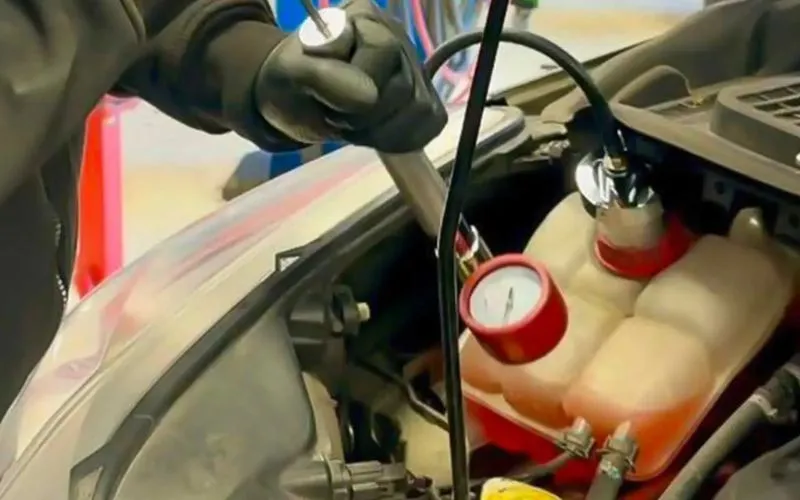
Pressure-testing the cooling system catches a brittle plastic housing or a weak water pump before it overheats the engine.
The parts we replace most in our shop tell a consistent story. Electric water pumps are a known weak point on BMW's N52, N54, and N55 engines. Thermostat housings and expansion tanks fail around the 60,000 to 90,000-mile mark. On the Porsche Cayenne, the plastic coolant pipes between the engine banks are a job we've done many times.
A cooling failure doesn't stay a cooling failure for long. A German engine runs tight tolerances, so overheating can warp a head or damage a gasket in minutes. Old coolant makes it worse by losing the corrosion protection that keeps the system healthy.
Watch for a sweet smell after a drive, a temperature gauge that climbs in traffic, or coolant spots under the car. Caught at a maintenance check, a water pump and thermostat is a planned repair. Caught on the freeway shoulder, it's a much bigger one.
What German Car Brakes Need Before They Score the Rotors
German performance brakes use larger rotors and higher-temperature pad compounds than a typical sedan, and they wear differently. A brake inspection checks pad thickness, rotor condition, brake fluid quality, and the wear sensors many of these cars use to flag the dashboard.
The pattern we see is simple. Pads worn past their limit start grinding into the rotor, and a job that could have been a pad replacement becomes pads plus rotors. Waiting rarely saves money on a European car.
Brake fluid is the part owners forget. It absorbs moisture over time, which lowers its boiling point and softens the pedal under hard use. Most German makes want it flushed on a schedule, and it's a small service that protects the whole system. When the pedal or the mileage says it's time, our German car brake repair uses the correct compound and rotor spec for your specific model.
Does a German Car Really Need Transmission Service?
Yes. The "lifetime fluid" label on many German transmissions is optimistic, and skipping fluid service is one of the more expensive mistakes we see. Fresh fluid on schedule protects parts that cost thousands to replace.
Dual-clutch gearboxes (Porsche PDK, Audi and VW DSG) and the ZF eight-speed automatic used across BMW and Audi all run better on clean fluid. Old fluid causes rough or delayed shifts, accelerates clutch-pack wear, and shortens the life of the mechatronic unit that controls the whole transmission.
A transmission fluid and filter service is a fraction of the cost of a rebuild. If your car is past 60,000 miles and has never had the transmission serviced, it's worth putting on the schedule.
Battery and Electrical Care on German Cars
German cars pull more from the battery than most vehicles, and they don't like a weak one. Many BMW and Mercedes models require a replacement battery to be coded to the car so the charging system treats it correctly, which is a step a parts-store swap skips.
Most of these cars use an AGM battery, and a marginal one can trigger warning lights and odd electronic behavior long before it fails outright. We test battery health, alternator output, and parasitic draw to find the drain that's killing a battery overnight.
When a warning light does appear, the fix starts with reading the car correctly. A proper engine diagnostics scan with dealer-level tools pulls the actual fault from every module instead of guessing at a generic code.
Warning Signs That Point to German Car Repair
Most of the German car repair we do could have been maintenance if the early signs got attention. Your car usually tells you something is coming before it leaves you stranded.
Watch for these:
- A sweet smell or a temperature gauge that climbs in traffic. Cooling system.
- A soft or low brake pedal, or squealing that turns to grinding. Brakes.
- Oil spots on the driveway or a burning-oil smell. A gasket or housing leak.
- Rough, delayed, or harsh shifts. Transmission fluid or clutch wear.
- A battery that struggles to start or electronics acting up. Battery or charging system.
- Any dashboard warning light that stays on. Time for a scan.
Caught early, most of these are a planned service. Ignored, they become the repair that ruins your week. When something feels off, it's worth a look before it gets worse.
Explore Our German Car Repair and Maintenance Services
Preventive maintenance keeps most problems small, but when a German or European auto repair is needed, Luxury Motors of South Bay in Hermosa Beach handles it with dealer-level tools and OEM-quality parts. Start here:
Routine Maintenance Oil, fluids, brakes, and 30/60/90K milestone service for German cars.
Engine Diagnostics Dealer-level fault isolation for check engine lights and warning codes.
Cooling System Repair Water pumps, thermostat housings, and expansion tanks.
Brake Repair Pads, rotors, and brake fluid service for European braking systems.
Transmission Service Fluid and filter service for PDK, DSG, and ZF automatics.
Electrical Diagnostics Battery coding, charging system, and module fault isolation.
"After taking it to multiple mechanics with no one able to figure out the issue, Shawn got back to me the same day with a solution." Israel B. | Google Review
I lead every diagnosis at Luxury Motors of South Bay, backed by 240 five-star Google reviews and a team that tells you what your car needs, not what makes the most money. If your German car is due for service, or something already feels off, work with an independent specialist who'll tell you the truth. You can call us at 310-504-0089 or book an appointment.
Frequently Asked Questions
How often should I change the oil in a German car?
Most German makes call for an oil change every 7,500 to 10,000 miles or once a year, whichever comes first. Turbocharged engines and hard local driving push that shorter. Follow the certified oil spec and the correct interval for your exact model, and check the level monthly between changes.
Can I use regular oil, or does my German car really need the certified synthetic?
It needs the certified synthetic. BMW LL-01, Porsche A40, Mercedes 229.5, and VW 502/505 aren't marketing labels, they're formulations these engines were designed around. Non-certified oil can build sludge and restrict flow to the bearings and turbo, so the right spec is cheap insurance against expensive engine work.
Why do German cars have so many cooling system problems?
These makes build parts of the cooling system from plastic to save weight, and those parts get brittle after years of heat cycles. In our shop, water pumps, thermostat housings, and expansion tanks are among the parts we replace most on higher-mileage BMW, Audi, and Porsche models. Regular checks catch the wear before it overheats the engine.
Is preventive maintenance at an independent shop cheaper than the dealer?
Usually, yes. We use the same dealer-level diagnostic tools and correct-spec parts, at an independent labor rate that typically runs well below the dealership. You get the depth without the dealer markup, plus photo documentation and an itemized estimate before any work begins.
Will servicing my car at an independent shop void the warranty?
No. The federal Magnuson-Moss Warranty Act protects your right to service your vehicle at a qualified independent shop without voiding the manufacturer's warranty, as long as the correct parts and procedures are used. We document every service with parts receipts and detailed records.
Due for service, or something already feels off? Start with an honest inspection from a German car specialist.
Learn more